
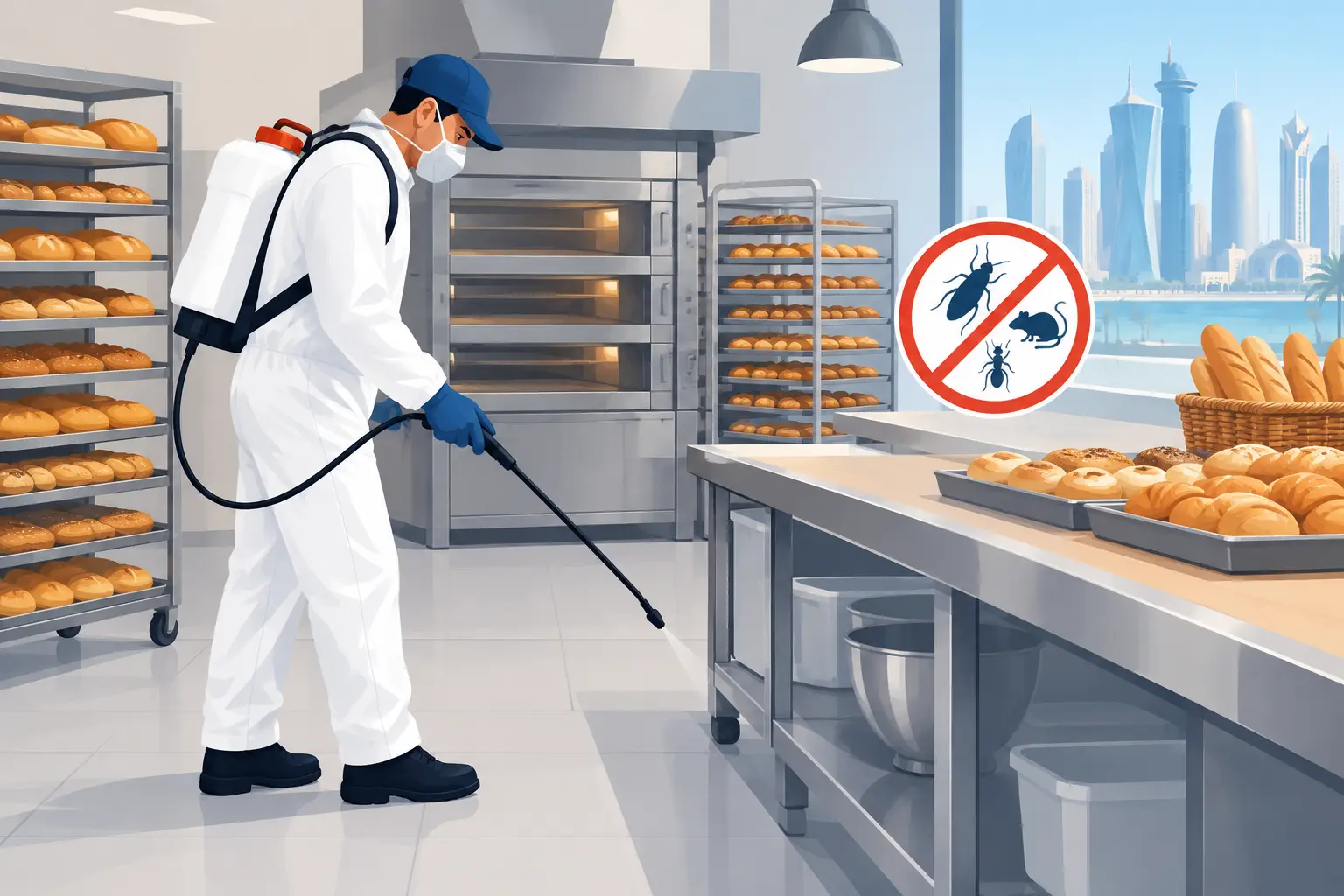
A single cockroach near a proofing rack, a fly around a glazing station, or rodent evidence in a dry-goods store can quickly become a serious business problem. Pest control for commercial bakeries and pastry production facilities in Qatar is not simply about removing visible pests. It protects ingredients, finished products, equipment, staff confidence, and the reputation you have worked hard to build.
Thank you for reading this post, don't forget to subscribe!Bakeries create conditions pests actively seek: flour, sugar, fats, crumbs, water, warmth, and quiet storage spaces. In Doha’s hot climate, pests may move indoors looking for food and shelter, especially around drains, delivery doors, utility gaps, and poorly sealed stockrooms. A professional, scheduled approach keeps small warning signs from becoming production disruptions.
Why Bakeries Need Specialized Pest Control
A bakery is different from a standard office or retail space. Production can begin before sunrise, ingredients may arrive every day, and the smallest crumbs can collect behind mixers, ovens, racks, refrigerators, and packaging equipment. Areas that look clean at the end of a shift can still provide food for cockroaches, ants, flies, pantry pests, or rodents.
The risk is not limited to product loss. Pest activity can affect hygiene inspections, create staff concerns, damage packaging, and put customer trust at risk. For businesses supplying cafés, hotels, supermarkets, events, or direct retail customers, one pest-related complaint can travel quickly.
The right service should fit the way your facility operates. That means inspection, targeted treatment, practical prevention, and follow-up visits planned around production hours. Closing a busy bakery unnecessarily is rarely the answer. A trained commercial pest control team works carefully to reduce disruption while focusing on the areas where pest pressure begins.
Pest Control for Commercial Bakeries and Pastry Production Facilities in Qatar
Effective control starts with identifying the pest, the source, and the conditions allowing it to remain. Treating only the insects or rodents you can see may provide temporary relief, but it will not solve the underlying issue. A complete plan looks at entry points, food storage, moisture, cleaning routines, waste handling, and equipment placement.
Cockroaches are a common concern in food premises because they hide in warm, narrow spaces near motors, drains, pipework, and electrical areas. Flies can enter through open delivery doors or breed where moisture and food residue build up. Ants may follow small spills or gaps around walls and windows. Stored-product insects can affect flour, grains, nuts, dried fruit, and other bakery ingredients if stock rotation and storage conditions are weak. Rodents can contaminate stock and cause costly damage by gnawing through cartons, cables, and seals.
A professional inspection should cover more than the production floor. Dry stores, cold rooms, staff areas, false ceilings, drain lines, waste zones, loading entrances, and external perimeter areas all need attention. This is how a pest control program becomes preventive rather than reactive.
Treatment Must Protect Food Operations
Commercial food environments require careful product selection and precise application. Treatments should be carried out by trained technicians who understand where products can and cannot be used around ingredients, food-contact surfaces, packaging, and active workstations. The goal is controlled, effective treatment without creating unnecessary risk for your team or your products.
Sometimes a focused treatment is enough. In other cases, recurring service is the safer choice, particularly for high-volume pastry production, central kitchens, or facilities with frequent deliveries and complex storage areas. The correct schedule depends on your pest history, building layout, production volume, and the surrounding environment.
A Practical Prevention Routine for Bakery Managers
Pest control works best when it supports your daily hygiene program. Your cleaning team and pest control provider should not operate separately. When both teams understand the facility’s problem areas, results are more reliable and easier to maintain.
Start with food storage. Keep flour, sugar, nuts, chocolate, dried fruit, and other dry ingredients in sealed, clearly labeled containers whenever possible. Store items off the floor and away from walls so staff can clean and inspect behind them. Follow first-in, first-out stock rotation and check cartons for damage before bringing them into the store.
Pay close attention to crumbs, grease, and moisture. Deep cleaning under heavy equipment matters because pests often feed in hidden places, not on the surfaces customers see. Floor drains need regular cleaning, and leaks should be repaired quickly. A small, ongoing drip beneath a sink or dishwasher can become an attractive pest harboring point.
Waste handling also makes a major difference. Empty internal bins regularly, clean the bin area, and keep exterior waste containers closed. If collections are delayed during busy periods, make sure waste is managed in a way that does not attract flies or rodents near entrances.
Finally, look at access points. Door sweeps, intact screens, sealed pipe gaps, and well-maintained loading areas reduce the chances of pests getting inside. Staff should know to report sightings, damaged packaging, droppings, unusual odors, or insect activity immediately. Fast reporting turns a potential issue into a manageable maintenance task.
What a Reliable Commercial Pest Service Should Include
A dependable bakery pest control service begins with a clear inspection and a treatment plan that makes sense for your business. You should know what was found, which areas need attention, what preventive action is recommended, and when follow-up service is due.
For many commercial bakeries, a recurring program is the most practical option. Regular inspections can identify activity early, while monitoring devices and documented checks help maintain control over time. However, frequency should be based on the facility, not guessed. A small retail bakery with limited production may need a different plan than a large pastry kitchen producing throughout the day.
The service should also be flexible. Bakery operations have demanding schedules, and treatment visits need to be coordinated around mixing, baking, packing, deliveries, and cleaning shifts. Punctual technicians, clear communication, and respectful work practices matter just as much as the treatment itself.
Cleaning Company provides commercial pest control in Doha and surrounding Qatar areas with scheduling designed around operational needs. Combining pest management with deep cleaning and sanitation support can be especially useful when hidden food residue, grease, or drain buildup is contributing to repeated pest activity.
When to Call for Professional Help
Do not wait for a major infestation before arranging an inspection. Repeated flies near a preparation area, cockroach sightings after closing, gnawed cartons, insect activity in dry ingredients, or droppings near storage areas all deserve prompt attention. Even if you see only one pest, there may be more activity hidden behind equipment or inside wall voids.
Professional help is also valuable before opening a new bakery, moving into a new production unit, or restarting operations after renovation. These periods often reveal gaps around plumbing, doors, drains, and equipment that are easier to correct before production is in full swing.
Your bakery should be known for fresh bread, precise pastry work, and clean presentation – not for preventable hygiene worries. With a planned pest control program, careful cleaning, and quick action when warning signs appear, you can protect your products and give staff and customers greater confidence every day.