
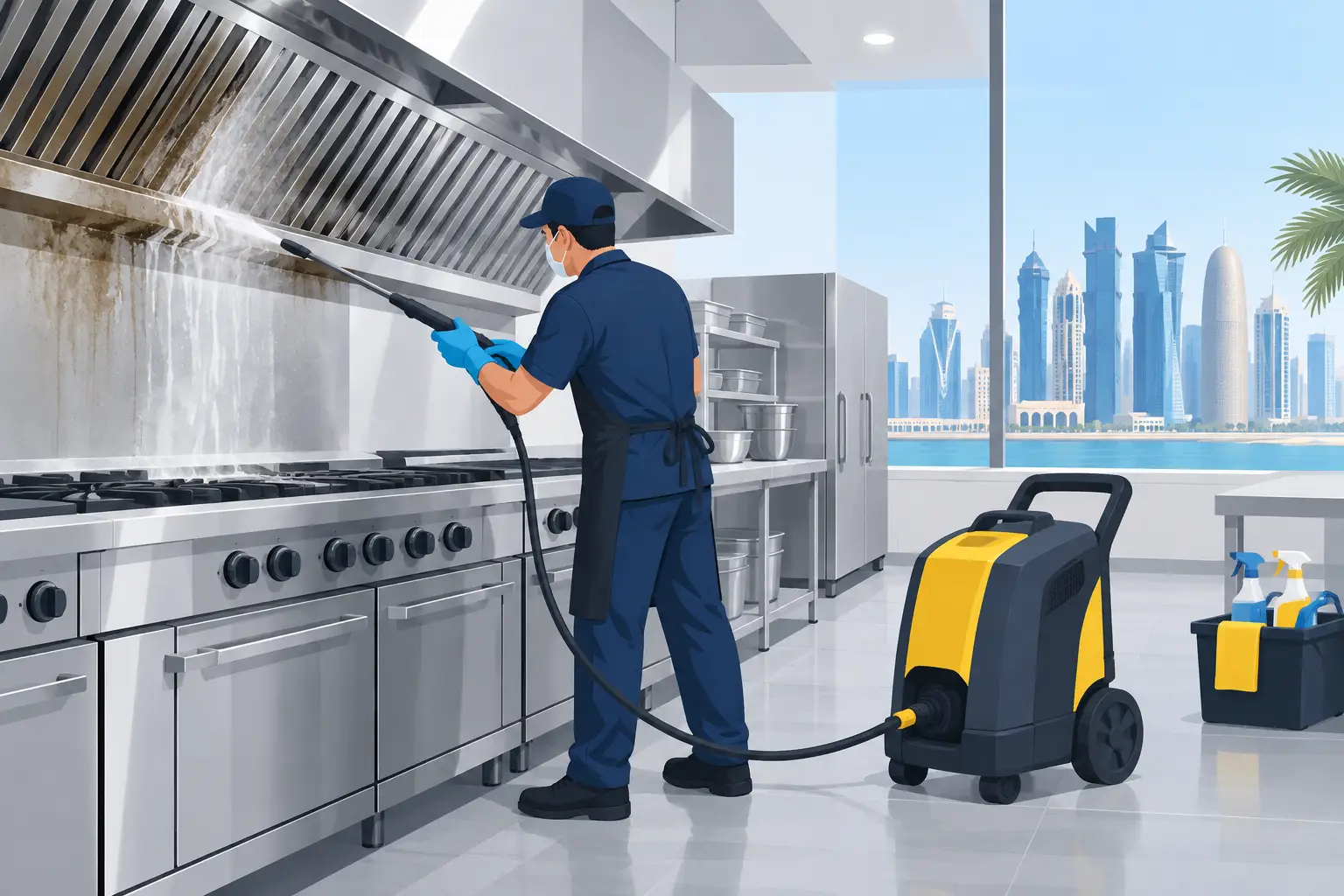
A busy kitchen can look clean at closing time while grease is still building up where it matters most. Commercial Kitchen Deep Degreasing in Qatar is designed for restaurants, cafes, hotels, cloud kitchens, bakeries, and staff canteens that need more than a quick wipe-down. It targets the sticky, hidden buildup around cooking equipment, exhaust areas, floors, walls, and work surfaces so your team can operate in a cleaner, safer space.
Thank you for reading this post, don't forget to subscribe!In Doha and across Qatar, commercial kitchens work hard. High cooking temperatures, frequent frying, humidity, and long service hours can leave behind grease that routine daily cleaning cannot fully remove. Left untreated, that buildup can create odors, attract pests, increase slip risks, and make equipment harder to maintain. A professional deep degreasing service gives your kitchen the reset it needs without adding more pressure to your staff.
Why Kitchen Grease Needs Professional Attention
Grease does not stay where it starts. Vapors from grilling, frying, and sautéing settle on canopy edges, wall tiles, appliance exteriors, ceiling areas, door handles, and floor joints. Over time, dust and food particles stick to those greasy surfaces, creating a layer that becomes tougher to remove with ordinary cleaners.
This is not only a visual issue. Grease near cooking lines and ventilation areas can become a fire concern, while residue on floors makes slips more likely during a fast shift. In corners, behind equipment, and under counters, buildup can also give pests a place to feed and hide. For food businesses, a neglected kitchen can affect staff comfort, customer confidence, and day-to-day hygiene standards.
A trained cleaning team uses suitable degreasing products, tools, and methods for commercial surfaces. The goal is thorough cleaning without damaging stainless steel, tile grout, equipment finishes, or food-preparation areas. The right approach depends on the kitchen layout, the type of cooking you do, and how heavily the space is used.
What Commercial Kitchen Deep Degreasing in Qatar Covers
A proper deep degreasing visit focuses on the areas that are often missed during routine cleaning. Before work begins, the team assesses the kitchen condition and identifies heavy-use zones, hidden grease points, and surfaces that need special care.
Cooking equipment exteriors are cleaned to remove stubborn residue from stoves, ovens, fryers, grills, hot plates, and surrounding splashbacks. Work counters, shelves, cabinets, handles, and wall tiles are treated where grease has collected. Floors receive close attention, especially around cooking stations, beneath movable equipment, and along edges where greasy water and food debris settle.
Exhaust hoods, filters, and canopy surroundings also require regular attention. These areas can collect grease quickly, particularly in kitchens with continuous frying or grilling. The exact scope should be discussed before booking because ductwork, internal extraction systems, and specialist fire-safety requirements may need a separate service plan. A dependable provider will be clear about what is included rather than making vague promises.
Deep degreasing can also include cleaning refrigerator exteriors, storage-area surfaces, waste zones, doors, switches, and hard-to-reach corners. If your premises need disinfection after degreasing, that can be scheduled as part of a broader hygiene plan. Cleaning Company can also coordinate pest-control and sanitation support, giving commercial operators one practical point of contact for ongoing cleanliness needs.
Deep Cleaning Is Different From Daily Kitchen Cleaning
Daily cleaning is essential, but it is usually designed to keep the kitchen ready for the next shift. Staff wipe counters, wash utensils, mop floors, empty bins, and clean visible spills. Those tasks protect everyday hygiene, yet they may not reach behind fixed appliances, under shelves, or into old grease deposits around the cooking line.
Deep degreasing is more intensive. It is planned work that breaks down accumulated grease and restores areas that have gradually become difficult to clean. Think of it as preventive maintenance for the environment where your staff prepare food. A clean kitchen is easier to inspect, easier to maintain, and more pleasant for everyone working inside it.
When Should You Schedule a Deep Degreasing Service?
There is no single schedule that suits every commercial kitchen. A high-volume restaurant with fryers running every day may need more frequent deep degreasing than a small office pantry or a cafe with limited hot-food preparation. Your menu, opening hours, ventilation setup, and kitchen size all matter.
For many businesses, a monthly or quarterly service works well alongside daily cleaning. Kitchens with heavy frying, grilling, or catering production may benefit from a more frequent plan. If you notice a sticky feel on walls or equipment, persistent cooking odors, darkened grout, slippery patches, or grease visible behind appliances, it is a good time to arrange professional help.
It also makes sense to book before a reopening, after renovation work, when taking over a new food premises, or ahead of a major inspection. Planning the visit outside peak service hours helps reduce disruption. Early mornings, late evenings, and quieter days are often the most convenient options for restaurants and cafes.
A Practical Process That Respects Your Operations
Commercial cleaning should not make a difficult day harder. The process starts with a booking at a time that suits your operation. Share the type of kitchen, your main concerns, the equipment involved, and whether you need one-time cleaning or recurring support.
On the scheduled day, trained staff arrive prepared for the agreed scope. They protect surrounding areas as needed, work through the kitchen systematically, and give extra attention to heavy-grease zones. Professional-grade products are selected carefully, with attention to the surface being cleaned and the need to maintain a safe food-service environment.
After degreasing, surfaces are wiped and cleaned so the kitchen is left orderly and ready for your team. Drying time and access restrictions can vary depending on the work completed, particularly for floors. Your provider should explain any practical steps your staff need to follow before restarting service.
What to Prepare Before the Team Arrives
A little preparation helps the job move faster and allows cleaners to reach the areas that need attention. Turn off and allow cooking equipment to cool before the appointment. Remove loose food items, utensils, and personal belongings from counters, and make sure the team can access the kitchen safely.
If equipment can be moved without risk, creating space behind and beneath it will help. Do not ask staff to shift heavy appliances that require technical disconnection. Gas lines, electrical connections, and built-in extraction systems should only be handled by appropriately qualified technicians.
Let the cleaning team know about delicate surfaces, equipment issues, restricted zones, or specific hygiene procedures at your business. Clear communication prevents surprises and helps deliver a more precise result.
Protecting Staff, Customers, and Your Reputation
A spotless front-of-house area matters, but the kitchen is where food businesses earn trust every day. Staff notice when floors are safer, equipment feels cleaner, and unpleasant smells are gone. Managers benefit from a workplace that is easier to supervise and maintain between professional visits.
The strongest results come from combining deep degreasing with a realistic daily routine. Staff should clean spills quickly, empty waste correctly, wipe equipment after use, and report grease buildup before it becomes severe. Professional cleaning does not replace good kitchen habits, and good kitchen habits do not replace periodic deep cleaning. Together, they create a safer standard that is easier to maintain.
For businesses in Doha, Lusail, West Bay, Al Rayyan, and surrounding areas, dependable scheduling matters as much as cleaning quality. Choose a team that arrives on time, respects your premises, and understands that downtime affects your business. Ask for a clear scope, suitable timing, and a plan that fits the way your kitchen actually operates.
A clean cooking line gives your team room to focus on the next order instead of old grease. Book commercial kitchen deep degreasing around your quietest hours, then let trained professionals handle the hard-to-reach areas while you get back to serving customers with confidence.