
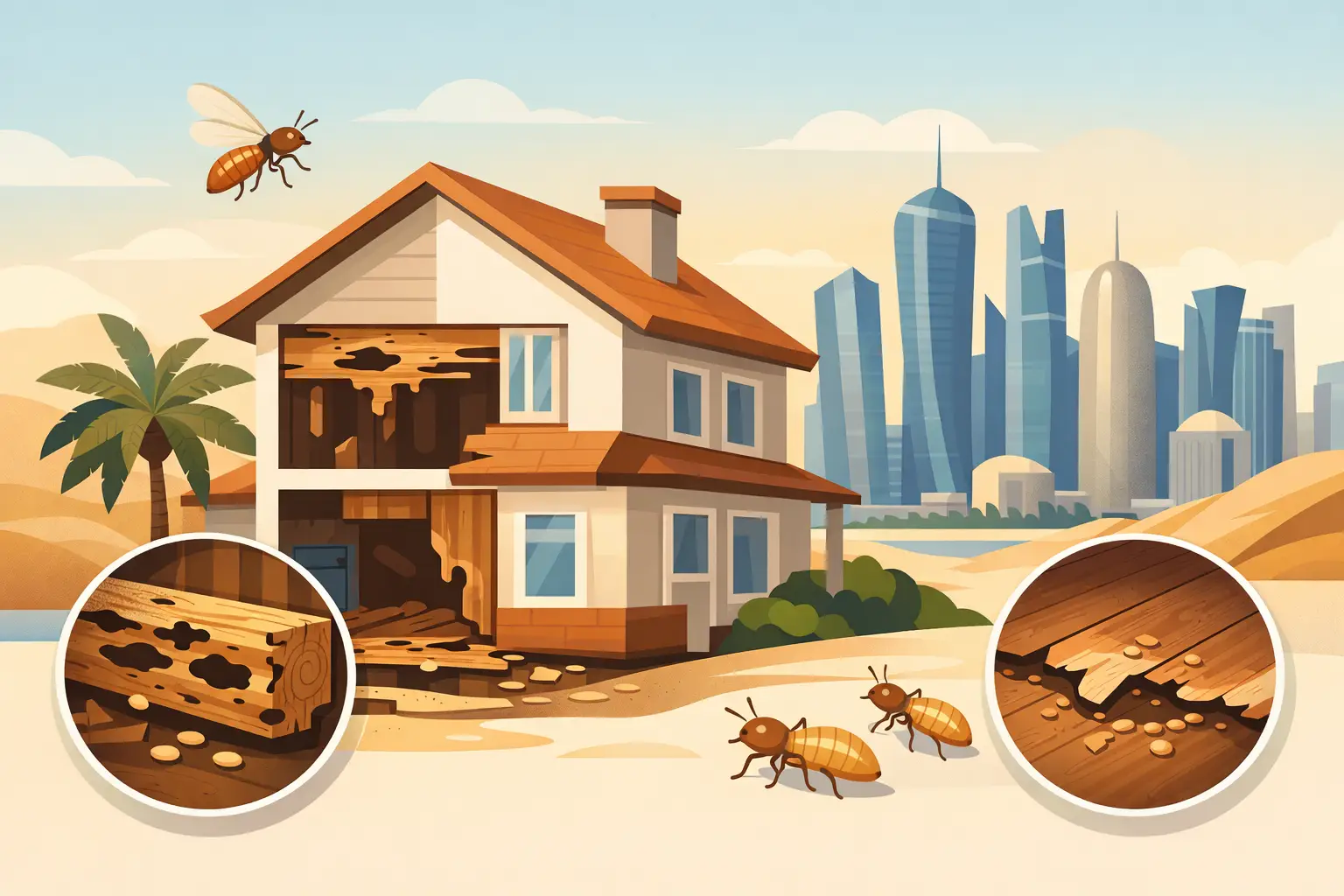
A door that suddenly sticks, a soft patch beneath the paint, or a small line of mud near a wall may look like a minor maintenance issue. In some cases, they are among the top signs of termite damage. Termites can stay hidden inside timber, door frames, cabinets, and wall voids while causing damage that is not obvious from across the room.
Thank you for reading this post, don't forget to subscribe!For homeowners, tenants, landlords, and office managers in Doha, early attention matters. The sooner a possible termite problem is inspected, the more options you may have to control it before woodwork, furniture, or fit-out materials need major repair. Here is what to look for and what to do next.
Why termite damage can be easy to miss
Termites do not usually leave visible piles of sawdust like some other wood-boring pests. Many species feed from the inside of wood and avoid open air and light. That means a polished cabinet, painted skirting board, or wooden door can look normal even when the material behind its surface has weakened.
In Qatar, air conditioning, plumbing areas, kitchens, bathrooms, roof access points, and landscaped spaces can create localized moisture that attracts pests. A clean property is easier to inspect, but even spotless homes and offices can develop termite activity. This is not a reflection of poor housekeeping. It is a building maintenance issue that needs a prompt, professional response.
Top signs of termite damage to check indoors
Hollow or weak-sounding wood
Gently tap wooden door frames, built-in cabinets, skirting boards, shelves, and exposed timber. Healthy wood usually feels firm and produces a solid sound. Wood affected by termites can sound hollow, thin, or papery because insects have eaten tunnels beneath the surface.
Do not press hard or try to break open the area yourself. Weak wood can crumble, and disturbing a colony may make evidence harder to assess. Note the location and arrange an inspection instead.
Doors and windows that become difficult to open
A sticking door does not automatically mean termites. Changes in temperature, humidity, settlement, or damaged hinges can also affect how doors and windows fit. Still, if a wooden frame appears swollen, warped, cracked, or unusually soft, termite activity is one possibility worth checking.
Pay particular attention when the problem appears alongside other clues, such as bubbling paint or small mud-like lines near the frame. One sign on its own may have a simple explanation. Several signs together deserve faster action.
Bubbling or peeling paint
Paint that looks blistered, uneven, or damp can be caused by a water leak, condensation, or termite tunnels close to the surface. The key is not to assume which one it is without checking. Moisture damage and pest activity can also exist at the same time.
Look around painted woodwork, lower walls, cupboards under sinks, and areas close to air-conditioning drainage. If the paint changes are localized and the material underneath feels soft, arrange a pest control assessment and investigate possible moisture sources as well.
Small holes, cracks, or damaged wood surfaces
Tiny holes in timber, cracked veneer, weakened cabinet panels, and wood that flakes away easily can indicate insect activity. Termite damage often follows the grain of the wood, leaving thin layers that may break when touched.
However, old furniture, wear and tear, and other insects can create similar marks. A trained technician can identify whether the evidence is consistent with termites and advise on treatment based on the affected area and property type.
Mud tubes on walls, foundations, or pipes
One of the clearest termite warning signs is a narrow, mud-like tube running along a wall, floor edge, pipe, foundation, or other surface. Subterranean termites build these covered pathways to travel between their nesting area and a food source while staying protected from dry air.
These tubes may be the width of a pencil or wider, and they are commonly found in hidden locations: behind stored items, inside utility cupboards, near ground-level access points, or along exterior walls. Do not simply wipe them away and assume the issue is solved. Their presence can indicate active movement, and the source should be inspected.
Other evidence outside your property
Termite checks should not stop at the living room or office entrance. Walk around the exterior, where it is safe to do so, and inspect wooden gates, pergolas, planters, fence posts, storage areas, and timber that touches soil. Decaying wood and constantly damp areas can create favorable conditions for pests.
Also look for damaged landscaping timbers, mud tubes on exterior walls, or unexplained weakness in outdoor woodwork. If your property has an attached garden, villa boundary wall, or ground-floor storage area, these places are especially useful to check. Apartment residents should report suspicious signs near shared walls, utility rooms, or common areas to building management as well as arranging advice for their own unit.
Swarming insects and discarded wings
Flying termites, often called swarmers, may appear when mature colonies reproduce. They can be mistaken for flying ants. Both can gather near lights or windows, but termites typically have straight antennae, similarly sized wings, and thicker waists than ants.
You may not see the insects themselves. Instead, you might find a small collection of matching, transparent wings near windowsills, doors, light fixtures, or balconies. This does not confirm where a colony is located, but it is a useful reason to request an inspection.
If possible, take a clear photo without handling insects or applying household chemicals. Identification affects the treatment approach, and a photo can help a pest control team understand what you noticed before arriving.
When the problem may be something else
Not every damaged wooden surface is caused by termites. Water leaks can soften timber and lift paint. Mold can discolor walls and create a musty smell. Carpenter ants, wood-boring beetles, poor installation, and ordinary age can also affect woodwork.
That is why a proper inspection is more useful than guessing. The trade-off is simple: waiting may avoid an unnecessary call-out if the issue is harmless, but it can also allow hidden damage to spread. When there is visible weakness, mud tubes, discarded wings, or more than one warning sign, early professional advice is generally the safer choice.
What to do if you spot possible termite damage
Start by keeping the area accessible. Move boxes, rugs, or stored items away from the suspected location if you can do so safely, but avoid pulling apart damaged wood or spraying insecticide into cracks. Surface sprays may kill a few visible insects without reaching the colony, and they can interfere with a technician’s assessment.
Take photos, note when you first noticed the problem, and check whether there are nearby leaks, damp patches, or air-conditioning drainage issues. If you rent your home or manage a commercial space, notify the owner, property manager, or facilities contact promptly. Termite control and repair responsibilities can depend on the lease and the cause of the damage.
A professional pest control visit should identify likely activity, inspect vulnerable areas, recommend a suitable treatment method, and explain any preparation required. Treatment is not one-size-fits-all. The right approach depends on the construction of the property, the location of activity, the type of termite, access to affected areas, and whether children, pets, staff, or customers use the space.
Help prevent conditions termites prefer
Prevention cannot guarantee that termites will never appear, but practical maintenance can reduce risk. Repair plumbing leaks promptly, prevent water from collecting near walls, and keep wooden items from resting directly on soil where possible. Avoid leaving damp cardboard, scrap wood, or unused timber stored against the property for long periods.
Regular deep cleaning can also make inspections easier by keeping utility areas, cabinets, storage corners, and wall edges visible. In busy homes and offices, those are exactly the places that can be overlooked for months. A clean, organized space helps you spot changes early, whether they are caused by pests, moisture, or wear.
If you notice any of the warning signs above in Doha or nearby areas, do not wait for obvious structural damage. Cleaning Company can arrange professional pest control support with a practical assessment and clear next steps, helping keep your home or workplace clean, safe, and protected. A quick inspection today can spare you from a far more disruptive repair later.