
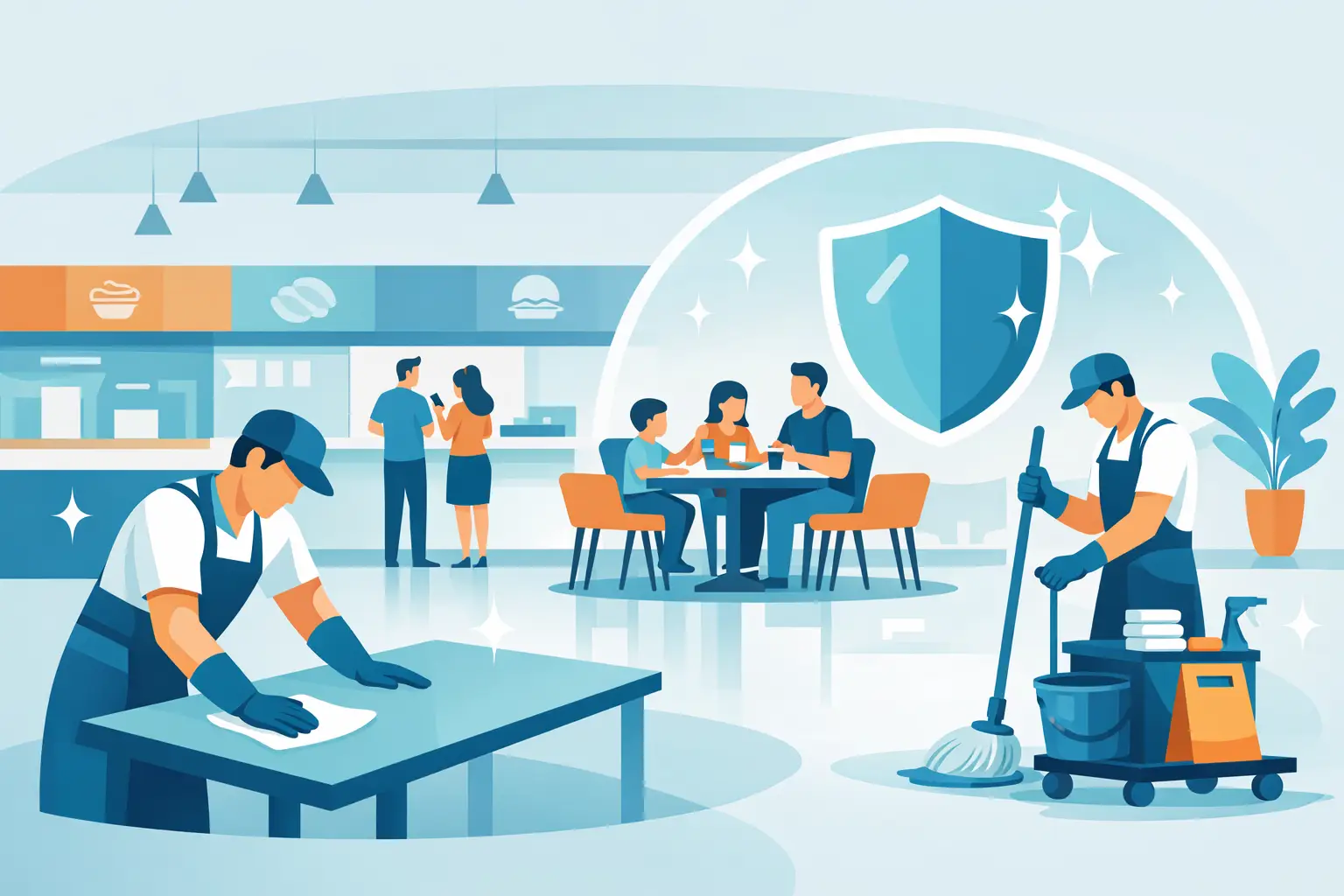
A food court can look busy and successful while quietly losing customer confidence. A sticky table, overflowing bin, greasy floor, or lingering food smell can change a guest’s impression in seconds. Shopping Mall Food Court Cleaning is not simply about making the space look presentable. It protects hygiene, reduces slip risks, supports tenant operations, and helps shoppers feel comfortable enough to stay, eat, and return.
Thank you for reading this post, don't forget to subscribe!For mall managers and food court operators in Doha, cleaning must keep pace with a high-traffic environment. Guests arrive throughout the day, families share tables, children spill drinks, and food vendors generate grease, packaging, and waste constantly. A dependable plan keeps the public area clean without disrupting the dining experience.
Why Food Courts Need a Different Cleaning Plan
A food court combines many of the cleaning challenges found in restaurants, retail spaces, washrooms, and common areas. Tables may turn over several times an hour during peak periods. Floors are exposed to oil, sauces, drinks, and dropped food. Waste stations fill quickly, while touchpoints such as tray return areas, high chairs, door handles, and payment counters are used by hundreds of people.
Cleaning only before opening and after closing is rarely enough. It may work for a quiet retail unit, but a busy food court needs visible daytime support alongside deeper scheduled cleaning. The right frequency depends on foot traffic, the number of vendors, operating hours, and whether the mall hosts weekend events or seasonal promotions.
There is also a difference between a floor that appears clean and a surface that has been properly sanitized. Both matter. Guests notice visible spills and crumbs immediately, while managers need confidence that shared dining surfaces and high-contact areas are being cleaned with suitable products and procedures.
The Areas That Need Daily Attention
The dining area is the first priority because it is where guests sit, eat, and form their opinion of the mall. Tables, chairs, booths, high chairs, condiment stations, tray return points, and waste bins should be checked continuously during trading hours. Staff should clear debris promptly, wipe surfaces between users when needed, and replace full liners before bins overflow.
Floors require the same level of attention. Small spills can become serious slip hazards, especially near beverage outlets, ice cream counters, entrances, and tray return areas. A trained cleaner should respond quickly with the right equipment, clearly mark wet areas, and leave the floor dry and safe. Sweeping alone will not remove grease or sticky residue that builds up over the day.
Washrooms near food courts also affect the overall guest experience. Restocking soap, tissue, and hand-drying supplies is part of hygiene management, not a separate detail. Mirrors, sinks, stalls, flush points, door handles, and baby changing areas need regular cleaning and disinfection, with checks recorded throughout the day.
Food court entrances, glass partitions, elevator buttons, railings, and nearby seating should not be overlooked. These common touchpoints connect the food court to the rest of the mall. When they are visibly dusty or marked with fingerprints, even a clean dining space can feel neglected.
Shopping Mall Food Court Cleaning During Peak Hours
Peak-time cleaning needs to be quick, discreet, and well organized. During lunch, evenings, weekends, and school holidays, the goal is not to carry out a full deep clean in front of diners. It is to keep the space safe, fresh, and ready for the next guest without creating unnecessary disruption.
A practical daytime team works in zones. One cleaner may focus on tables and seating, another on floors and spills, and another on waste stations and washroom checks. This prevents the common problem of staff being pulled away to handle an urgent spill while bins and tables begin to pile up elsewhere.
Clear communication matters, too. Mall management, security teams, and food vendors should know who to contact when there is a broken glass incident, a major spill, a pest concern, or a sanitation issue. Fast reporting helps contain the problem before it affects guests or neighboring tenants.
Cleaning teams should use appropriate signage whenever floors are wet or a spill is being treated. Safety signs are a simple but essential part of professional service. They protect shoppers, staff, and the mall from avoidable accidents.
Deep Cleaning Keeps Grease and Odors From Building Up
Daily service handles what guests can see. Scheduled deep cleaning addresses what gradually builds up beneath tables, behind bins, around equipment areas, on grout lines, and along skirting boards. This work is especially valuable in Doha, where heat, heavy foot traffic, and long operating hours can make odors and surface residue more noticeable.
A food court deep clean may include machine scrubbing of hard floors, detailed cleaning of grout and corners, degreasing of waste areas, washing of wall surfaces where required, and treatment of seats and upholstery. Glass, metal finishes, vents, and signage may also need detailed attention depending on the layout.
Carpeted zones or upholstered seating require a different method from tile or vinyl floors. Using the wrong product can leave stains, damage fibers, or create a damp surface that takes too long to dry. Professional cleaners assess the material first, then select a suitable treatment that removes dirt while protecting the finish.
Odor control should never rely only on fragrance. Air freshener can temporarily cover a problem, but it does not remove food residue, waste leakage, grease, or bacteria. Proper cleaning of bins, drains, floors, and hard-to-reach corners is what creates a genuinely fresh environment.
Hygiene Practices That Support Food Court Operations
Food court cleaning teams work around food service, so safe practices are essential. Cleaning cloths, mops, and tools should be color-coded or separated by area to reduce the risk of cross-contamination. Equipment used in washrooms should never be used in dining areas. Products should be suitable for commercial settings and used according to their instructions.
For shared eating spaces, cleaning schedules should focus on the moments that matter most: before opening, throughout service, after peak periods, and after closing. High-touch surfaces may need more frequent attention than low-contact areas. A tray return station, for example, can need repeated cleaning during a busy lunch rush, while a high wall surface may only need routine scheduled care.
Disinfection is useful when applied correctly, particularly on high-contact surfaces and during periods of increased illness concerns. However, it is not a replacement for removing visible dirt first. A surface should be cleaned before it is disinfected so the product can work effectively.
Eco-friendly, child- and pet-safe products can be a sensible choice for public areas when they are appropriate for the surface and cleaning task. In a food court, families with young children may touch seats, tables, and railings throughout the day. Choosing safer products while maintaining effective hygiene supports a more welcoming environment.
Common Gaps That Create Bigger Problems
The most frequent cleaning gap is treating waste management as a back-of-house task only. Public bins need consistent emptying, but their exterior, lids, surrounding floor, and nearby walls also need cleaning. A clean bin area prevents smells, pests, and a poor visual impression.
Another gap is waiting until closing time to deal with floor residue. A small spill may be cleaned quickly, yet a wider layer of grease can remain around popular vendors and seating zones. Regular spot mopping during the day and machine cleaning on a schedule help prevent slippery, dull-looking floors.
Some facilities also overlook the spaces between vendors and common areas. Service corridors, shared doors, delivery points, and utility access zones can collect boxes, food debris, and dust. These places may not be visible to every guest, but poor conditions can affect hygiene, pest control, and staff safety.
Finally, a cleaning plan can fail when there is no accountability. Checklists, supervisor inspections, and clear shift handovers help ensure that routine tasks are completed even on the busiest days. The aim is not paperwork for its own sake. It is consistent standards from the first customer of the day to the last.
Choosing a Reliable Food Court Cleaning Partner in Doha
A commercial cleaning provider should understand that food courts do not run on a fixed, quiet schedule. Mall management may need early-morning cleaning before opening, daytime attendants, overnight deep cleaning, or rapid support after an event. Flexible scheduling is valuable, but reliability is even more important. A team that arrives late can affect tenant readiness and the customer experience before the day begins.
Ask whether staff are trained for commercial public areas, how they manage spills and high-traffic periods, and whether they can build a plan around your operating hours. It is also worth discussing floor types, seating materials, washroom coverage, waste requirements, and any pest-control or disinfection needs. A customized plan is usually more effective than applying the same routine to every mall area.
Cleaning Company supports commercial clients across Doha and Qatar with trained personnel, safe cleaning products, and schedules built around the demands of each site. For a food court, the priority is simple: give every guest a clean place to sit, protect staff and visitors from avoidable hazards, and keep the space ready for the next rush.
A well-cleaned food court does more than pass an inspection. It makes guests feel cared for, gives tenants a better environment to operate in, and helps the entire mall maintain the standard shoppers expect.