
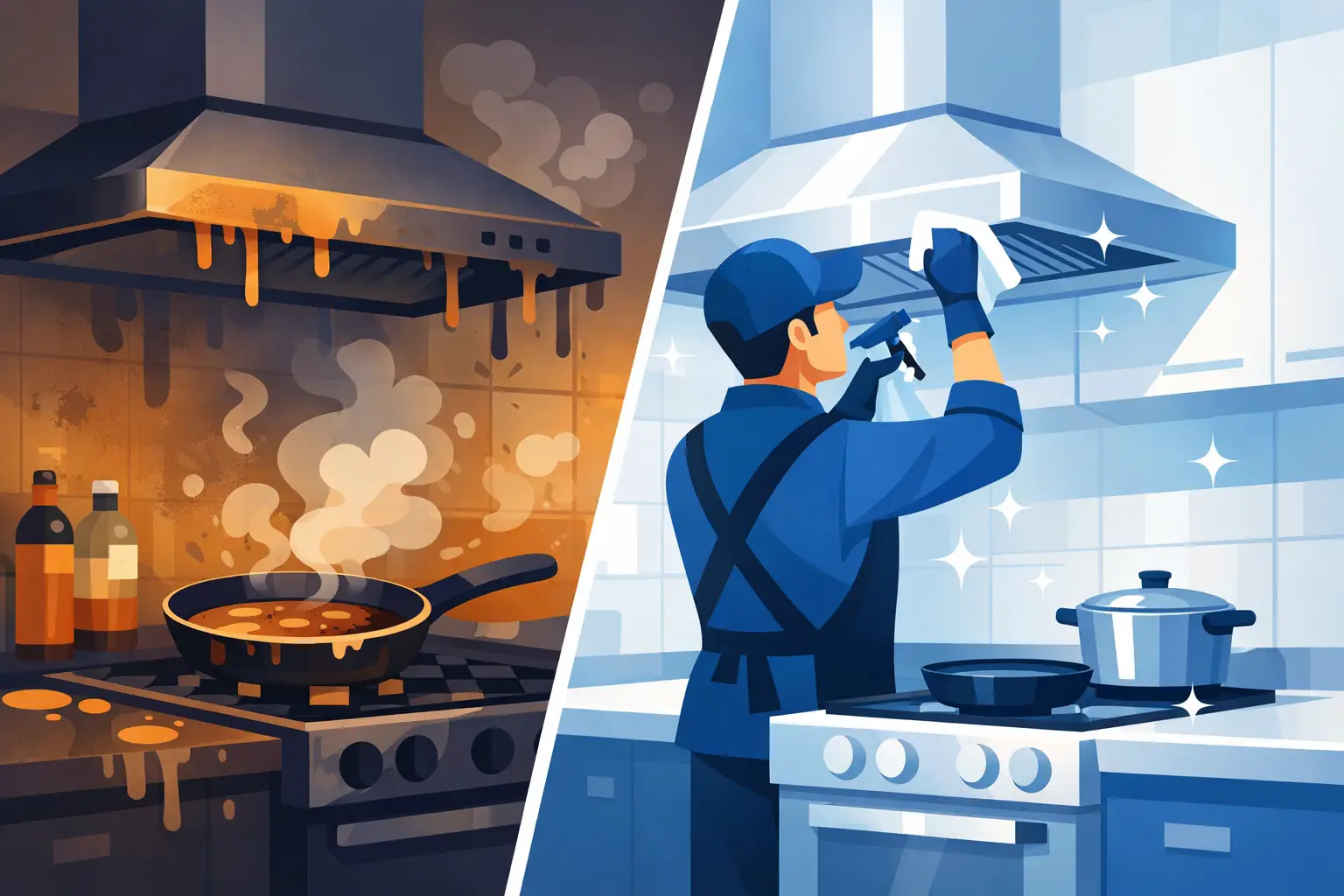
A kitchen can look clean at first glance while grease is quietly building up in the places that matter most. The stovetop may be wiped down, dishes may be put away, and floors may be mopped, but cooking oils do not stay where they land. This is Why Kitchen Grease Requires Professional Cleaning: heat turns grease into a sticky film that settles on walls, cabinets, appliances, filters, vents, and hard-to-reach surfaces.
Thank you for reading this post, don't forget to subscribe!For homes, restaurants, offices with pantry areas, and commercial kitchens in Doha, grease buildup is more than a cosmetic issue. It can affect hygiene, create persistent odors, attract pests, and increase fire risk. Regular daily cleaning is still essential, but it does not always remove the older, hidden residue that accumulates over time.
Why Kitchen Grease Requires Professional Cleaning
Grease is difficult because it changes as it sits. Fresh splatters may come off with warm water and a suitable kitchen cleaner. Older grease is different. It bonds to surfaces, traps dust, and hardens into a stubborn layer that ordinary wiping can smear rather than remove.
Cooking in a busy household can produce this buildup quickly, especially around frying pans, grills, ovens, range hoods, and backsplashes. In commercial settings, the volume and frequency of cooking make the problem even more serious. Grease can spread through the air as vapor, then cool and settle far beyond the cooking area.
Professional cleaning teams use the right degreasers, tools, and methods for the surface being treated. The goal is not simply to make the kitchen shine. It is to lift embedded grease safely without damaging stainless steel, painted finishes, tiles, cabinet surfaces, or delicate appliance parts.
Hidden Grease Can Create a Fire Hazard
One of the biggest reasons to take kitchen grease seriously is fire safety. Grease is combustible. When it builds up on stovetops, inside ovens, around burners, and in extractor hoods or filters, it can become fuel if exposed to high heat or flames.
A clean-looking hood is not always a clean hood. Filters can hold greasy residue even when their outer surface appears fine, and surrounding areas may collect a layer of oil that is easy to miss during routine cleaning. This is particularly relevant for restaurants, cafés, staff kitchens, and any property where meals are prepared frequently.
Professional deep cleaning focuses on the areas that receive the most heat and the least attention. That includes the spaces behind and beneath appliances, grease-prone wall sections, hood exteriors, filters where accessible, and the edges around cooking equipment. The exact service should suit the kitchen setup. A small apartment kitchen does not require the same approach as a high-use commercial kitchen, but both benefit from removing grease before it becomes a larger safety concern.
Grease Affects Hygiene and Indoor Air Quality
Grease does not stay clean after it settles. It collects dust, food particles, and moisture, creating a grimy surface that is harder to sanitize properly. In a family kitchen, this can be a concern around food-preparation areas, cabinet handles, and frequently touched appliances. In a business kitchen, poor grease control can affect the overall cleanliness standards customers and staff expect.
Lingering cooking odors are another common sign. If your kitchen smells oily or stale even after taking out the trash and washing the dishes, residue on filters, tiles, cabinets, and appliance surfaces may be part of the problem. Sprays and air fresheners can temporarily cover the smell, but they do not remove its source.
A proper grease-cleaning service addresses the buildup itself. Trained cleaners work through the kitchen systematically, giving special attention to high-contact zones and areas where grease often gathers unnoticed. When suitable eco-friendly products are used correctly, the result is a fresher kitchen without filling the space with unnecessarily harsh chemical odors. This matters for homes with children, pets, or people sensitive to strong cleaning products.
Greasy Surfaces Can Attract Pests
Crumbs are not the only thing that attracts pests. Even a thin film of food grease can provide a source of residue that insects seek out. Grease around the sides of ovens, under cooktops, behind refrigerators, and inside neglected cabinet corners can make a kitchen more appealing to cockroaches and other pests.
Cleaning alone cannot solve every pest issue. If there is an active infestation, pest control may also be needed. Still, deep grease removal is an important preventive step because it reduces the food residue pests rely on. It also makes it easier to inspect the kitchen for droppings, gaps, leaks, or other warning signs that might otherwise be hidden by grime.
For tenants preparing to move out, landlords managing properties, and families settling into a new home, a professional kitchen deep clean can be especially valuable. It removes the residue left by previous heavy use and gives the space a healthier, more comfortable starting point.
DIY Cleaning Has Limits
Routine cleaning should not be replaced by professional service. Wiping splatters after cooking, cleaning the stovetop, washing dishes promptly, and emptying the trash are the habits that keep grease from building up too quickly. However, there is a difference between maintaining a kitchen and restoring one that has accumulated months of residue.
DIY products may not be strong enough for baked-on grease, and using the wrong product can cause damage. Abrasive pads can scratch stainless steel, strong chemicals can affect certain finishes, and excessive moisture near electrical components can create another problem. Mixing cleaning products is also unsafe, particularly when bleach or ammonia-based formulas are involved.
There is also the practical issue of access. Most people do not have the time, equipment, or confidence to pull out heavy appliances, clean every tight edge safely, or treat a greasy range hood without making a mess. A professional team can handle the demanding work efficiently while using techniques suited to the kitchen’s materials and condition.
When to Schedule a Professional Kitchen Deep Clean
The right schedule depends on how often the kitchen is used and what kind of cooking happens there. A household that mainly prepares light meals may only need a professional kitchen deep clean occasionally. A home where frying and heavy cooking happen daily may need it more often, particularly before holidays, after gatherings, or when odors and sticky surfaces start to return.
Commercial kitchens, office pantries, shared staff areas, and food-service spaces usually need more frequent attention. Regular service plans help prevent grease from reaching the point where it becomes difficult, time-consuming, and costly to remove.
There are several signs it is time to book help: cabinet surfaces feel sticky after wiping, the extractor area has a greasy smell, tiles near the stove look dull or yellowed, the oven has baked-on residue, or you can see grime around appliance edges. A move-in, move-out, post-renovation, or pre-event clean is also a practical time to address the kitchen properly.
What a Professional Grease Clean Should Cover
A quality service begins by assessing the kitchen rather than applying one method everywhere. Different surfaces need different care. Tile, glass, stainless steel, laminate, painted cabinets, and appliance interiors can all respond differently to cleaning products and scrubbing pressure.
The service commonly focuses on the cooktop and surrounding backsplash, exterior appliance surfaces, oven and microwave areas, cabinet fronts and handles, countertops, sinks, floor edges, and grease-prone spaces around accessible appliances. Range hood cleaning may include exterior surfaces and removable filters, depending on the equipment and the service scope.
Before booking, describe the kitchen honestly. Mention heavy frying, long-standing grease, visible stains, odors, pest concerns, or appliances that need special care. Clear details help the cleaning team prepare the right products, tools, and amount of time. At Cleaning Company, trained teams can tailor a deep-cleaning visit around the condition of your home, office, or commercial kitchen in Qatar.
A professionally cleaned kitchen is easier to maintain after the service is complete. Once the heavy residue is removed, daily wiping works better, surfaces feel fresher, and the kitchen becomes a more pleasant place to cook, work, and gather.