
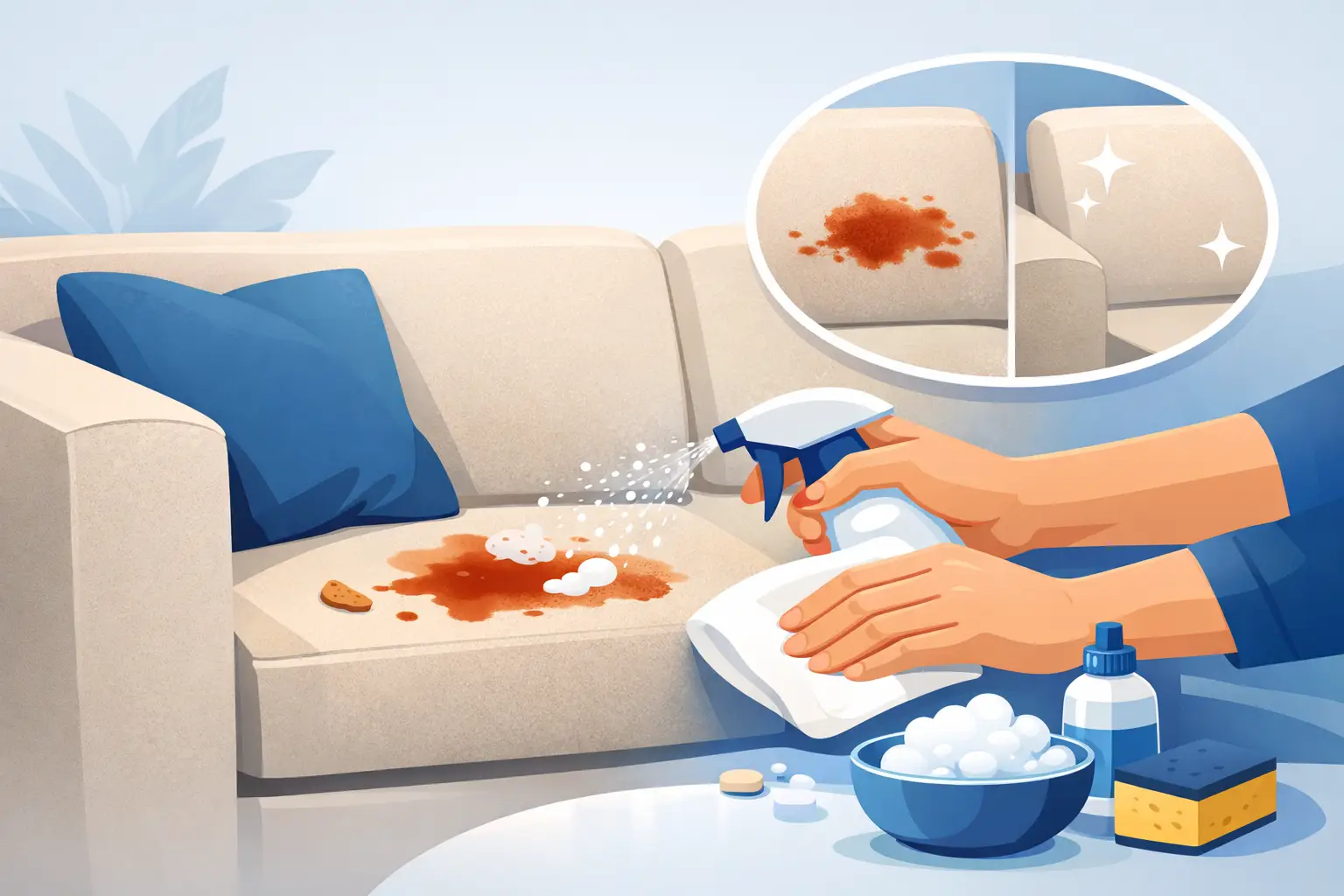
A dropped plate of biryani, a child’s chocolate-covered hand, or coffee that tips onto the sofa can leave more than an obvious mark. Food stains often contain oils, proteins, dyes, or sugar, and the wrong cleaning method can push them deeper into the fabric. For most fresh spills, the best way to remove food stains from upholstery is to act quickly, blot gently, and use only as much moisture as the fabric can safely handle.
Thank you for reading this post, don't forget to subscribe!For homes, offices, and rental properties in Doha, this matters even more during busy family gatherings, work lunches, and everyday entertaining. A clean sofa or dining chair helps the entire room feel fresh, comfortable, and ready to use.
Act Fast, but Do Not Scrub
The first few minutes after a spill make the biggest difference. Start by lifting away solid food with a spoon, dull knife, or the edge of a clean card. Work from the outside of the spill toward the center so you do not spread it across a larger area.
Next, place a white microfiber cloth or plain paper towel over the stain and press lightly. Replace it with a clean section as it absorbs the food and liquid. Avoid colored towels, printed napkins, or tissues that may transfer dye onto light upholstery.
Scrubbing is the most common mistake. It frays fibers, drives residue into the cushion, and can leave a faded patch that looks worse than the original stain. Blotting may feel slower, but it protects the fabric and gives cleaning solutions a better chance to work.
Check the Upholstery Before Applying Any Cleaner
Before using water, soap, or a stain remover, find the manufacturer’s cleaning tag. It is often under a cushion, beneath the sofa frame, or on the underside of a dining chair. The code tells you what type of cleaning is safest.
A “W” code usually means water-based cleaning is acceptable. “S” means use a solvent-based cleaner only, while “WS” or “SW” allows either method. An “X” code means the upholstery should only be vacuumed or professionally cleaned. If there is no label, test your chosen method in a hidden area first, such as behind a cushion or along the lower back of the furniture.
Also consider the fabric itself. Cotton, linen, velvet, wool, silk, suede, and delicate blends do not react the same way. Natural fibers can shrink, fade, or develop water rings, while some synthetic fabrics hold oily residue stubbornly. When the upholstery is expensive, antique, lightly colored, or heavily stained, a cautious approach is always the better choice.
The Best Way to Remove Food Stains From Upholstery
For water-safe upholstery, a mild cleaning solution and patient blotting are usually enough for fresh food marks. Gather a vacuum with an upholstery attachment, white cloths, lukewarm water, a small bowl, mild clear dish soap, and a dry towel. Do not soak the cushion or pour solution directly onto the fabric.
- Remove loose residue first. Vacuum crumbs, rice, dried sauce, or other small particles after lifting away the larger pieces. This prevents grit from becoming mud once moisture is added.
- Mix a gentle solution. Add just a few drops of clear dish soap to a bowl of lukewarm water. Strong detergents can leave residue that attracts dust, while hot water may set protein-based stains such as milk, egg, or gravy.
- Dampen the cloth, not the sofa. Dip a clean white cloth into the solution and wring it out well. The cloth should be damp, never dripping.
- Blot from the edge inward. Press and lift repeatedly, using a clean part of the cloth each time. Do not rub in circles. Continue until the color stops transferring to the cloth.
- Remove soap residue. Use a second cloth lightly dampened with plain water to blot the treated area. Then press a dry towel firmly over it to absorb as much moisture as possible.
Allow the upholstery to air-dry fully before sitting on it or replacing cushions. Open windows when practical, use air conditioning, or place a fan nearby to improve airflow. In Qatar’s humid periods, damp cushions can take longer to dry, so avoiding oversaturation is especially important.
Sauce, Tomato, and Curry Stains
Tomato sauce, curry, and colored gravies contain pigments that can linger, particularly on pale fabric. Remove solids first, then use the mild soap method. Repeat gently rather than using a stronger product immediately.
Do not apply bleach, even on white upholstery. It can discolor fabric, weaken fibers, and create a patchy result. Curry stains may need professional treatment if turmeric has dyed the fabric or if the stain has dried in direct heat.
Chocolate, Ice Cream, and Dairy Spills
Chocolate and dairy can contain both fat and protein. Start by lifting the residue, then blot with cool or lukewarm water and a mild soap solution. Avoid hot water because it can set protein residue into the fabric.
If an oily shadow remains after the upholstery dries, do not keep adding water. A professional upholstery cleaner can use the right low-moisture process to lift oils without leaving water marks or an overly wet cushion.
Greasy Food and Cooking Oil
Oil from fries, burgers, pizza, or salad dressing is often harder to remove than a colorful spill because it can spread beyond the visible mark. Blot first with a dry cloth. For water-safe fabric, follow with very light application of the mild dish soap solution, as dish soap is designed to break down grease.
Work patiently and avoid saturating the area. If the stain remains dark after drying, stop before trying multiple household products. Combining cleaners can set the stain, affect the fabric color, or leave a sticky residue.
Coffee, Tea, Juice, and Soft Drinks
Blot beverages right away, especially on light-colored sofas and office chairs. Use the same mild solution on water-safe upholstery, followed by a plain-water blot. Sugary drinks deserve extra attention because invisible residue can make fabric feel stiff and attract dust after it dries.
For red juice, dark coffee, or tea on delicate fabric, it is safer to arrange professional cleaning sooner rather than attempting harsh stain treatments at home.
What Not to Do When Treating Upholstery Stains
A food stain can become permanent when a well-meaning cleaning attempt goes too far. Avoid using excessive water, which can soak the foam padding, cause odors, and leave a ring around the treated spot. Avoid heat from a hair dryer or steam cleaner unless the manufacturer specifically permits it, since heat can lock in certain stains.
Skip bleach, strong degreasers, laundry detergent, and random online mixtures. These products may be suitable for hard surfaces or washable clothes, but upholstery needs a controlled method. Never mix cleaning products, particularly if one contains bleach or ammonia.
It is also best not to remove cushion covers and wash them unless their labels clearly say they are machine washable. The cover may shrink while the rest of the sofa remains unchanged, making it difficult to put back on neatly.
When a Professional Upholstery Cleaning Service Is the Safer Option
Home treatment works best for small, fresh spills on clearly labeled water-safe fabric. Professional help is a smarter choice for old stains, large spills, odors, delicate materials, pale upholstery, or food that has reached the cushion filling. It is also useful after repeated spot cleaning, when a sofa looks uneven or has several marks in different areas.
Trained upholstery cleaners assess the fabric, stain type, and cleaning code before selecting products and equipment. The goal is not simply to make the mark less visible. It is to remove residue, protect the upholstery, and leave the furniture clean and fresh without unnecessary moisture.
For busy households and workplaces across Doha, Lusail, West Bay, and Al Rayyan, Cleaning Company provides professional sofa and upholstery treatment using methods suited to the material and level of soiling. This can be especially helpful before guests arrive, after a family event, or when moving out of a rental property.
Keep the Next Spill Easier to Handle
Food is part of daily life, so prevention does not have to mean banning snacks from the sofa. Use washable throws in high-use family areas, keep drinks on stable side tables, and clean crumbs from cushions regularly. A quick vacuum helps prevent small particles from working into the weave.
Keep a small stain kit nearby with white microfiber cloths, a spoon, and mild clear dish soap. When the next spill happens, calm, quick blotting and the right amount of moisture will protect your upholstery far better than aggressive scrubbing.