
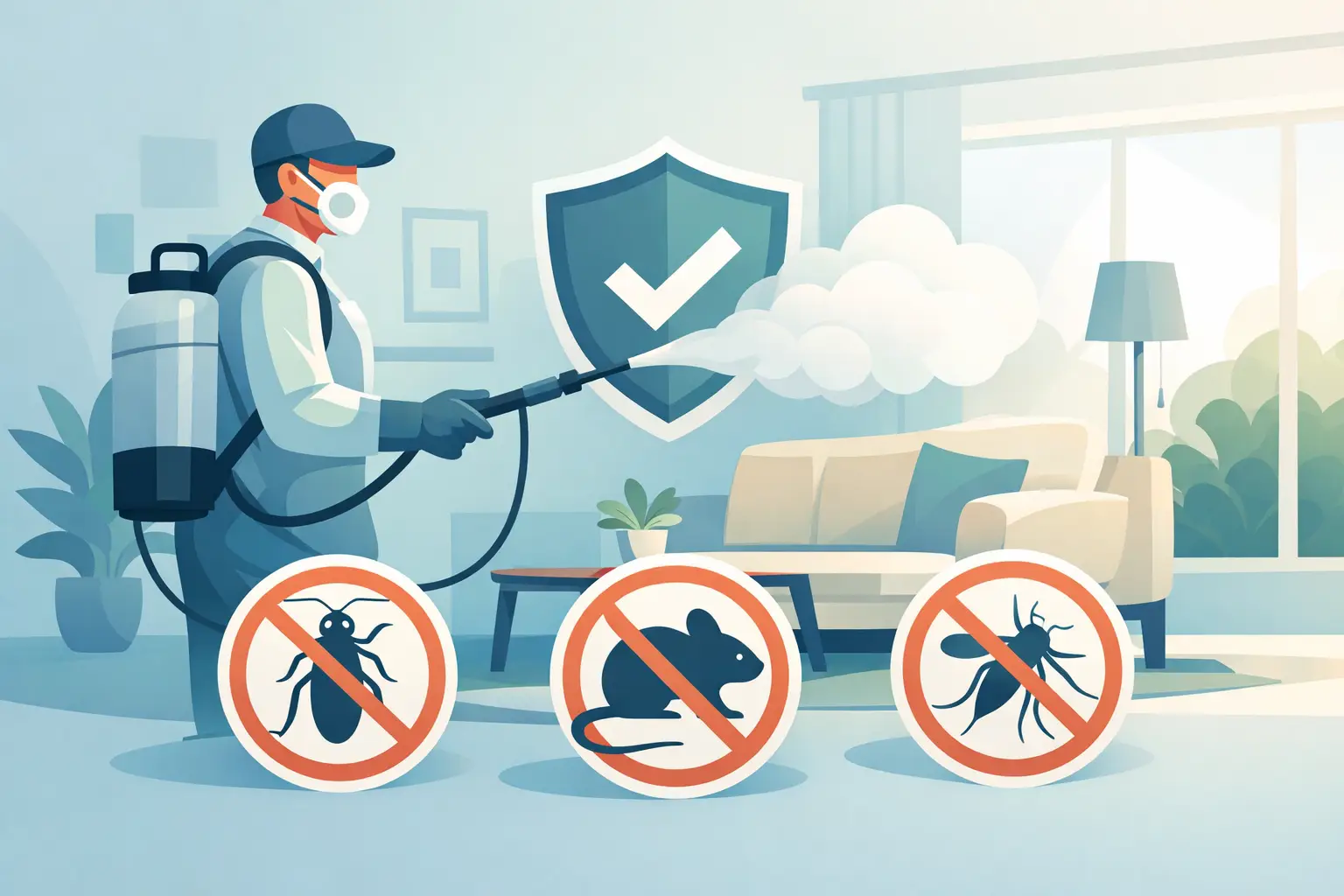
You notice ants along the kitchen counter or a cockroach near the bathroom drain, and the first question is usually not just how to get rid of them. It is whether is pest control safe indoors, especially when children, pets, food prep areas, and everyday routines are all part of the same space. That concern is completely reasonable.
Thank you for reading this post, don't forget to subscribe!The short answer is yes, indoor pest control can be safe when it is handled properly. The longer answer is that safety depends on the treatment method, the product used, the amount applied, the skill of the technician, and how closely post-treatment instructions are followed. Safe pest control is not about using the strongest possible chemical. It is about using the right treatment, in the right place, at the right level.
Is pest control safe indoors for homes and offices?
In most homes and offices, indoor pest control is considered safe when a trained professional uses approved products according to label instructions. That matters because the label is not just packaging. It is a legal and safety guide that defines where a product can be used, how much should be applied, and what precautions are necessary.
This is also why professional treatment is different from random over-the-counter spraying. Many indoor pest problems do not require heavy spraying across floors, walls, or furniture. In fact, targeted treatments such as gel baits, crack-and-crevice applications, entry-point sealing, and localized dusting are often more effective and involve less exposure inside the property.
For cleaning offices, clinics, apartments, and family homes, the goal is to reduce pest activity while keeping disruption low. A good pest control plan focuses on control with minimal exposure, not treatment for its own sake.
What actually affects indoor pest control safety?
The biggest factor is the type of pest. Cockroach control often relies on gel baits in hidden areas rather than broad surface spraying. Ant control may involve bait placement and sealing access points. Bed bug treatment can require a more specialized approach, sometimes combining vacuuming, heat, and carefully applied products. Rodent control usually centers on traps, exclusion work, and secure bait stations rather than open poison placement.
The second factor is who will be in the space after treatment. A home with toddlers, pets, elderly family members, or people with asthma may need a more cautious treatment plan. The same goes for workplaces where staff return quickly or where food handling takes place.
Ventilation, room size, surface type, and the severity of the infestation also matter. A light ant issue in a dry pantry is different from a larger cockroach problem in a humid kitchen with multiple hiding spots. Indoor safety is not one-size-fits-all, which is why inspection comes first.
Safe indoor methods are often the smartest ones
Many people assume pest control means strong odor, wet floors, and having to leave for hours. Sometimes that does happen, but it is not the standard for every job. Modern indoor pest control often uses lower-impact methods that are designed to be precise.
Gel baits are one of the best examples. They are placed in hidden spots where pests travel, not across open living areas. Insect growth regulators can interrupt breeding cycles without relying only on immediate kill products. Mechanical methods such as traps, proofing work, and sanitation improvements can also reduce the need for repeated chemical use.
This is where a professional provider adds value. Instead of treating every room the same way, a trained technician can choose the least disruptive method that still solves the problem. For many properties, that is the safest and most practical route.
When extra caution is needed indoors
Even when indoor pest control is generally safe, some situations deserve more care. If anyone in the property has respiratory sensitivities, allergies, or a weakened immune system, treatment planning should take that into account. Pregnant occupants and very young children are another reason to be more selective with products and scheduling.
Pets need special attention too. Dogs and cats may lick treated surfaces, and birds are often more sensitive to airborne substances than other household animals. Fish tanks should be covered if advised, and pet bowls, toys, and bedding should be moved away from treatment zones before service begins.
That does not mean treatment has to be avoided. It means the technician should know who uses the space and tailor the approach accordingly. Clear communication before the visit is one of the simplest ways to make indoor treatment safer.
How to prepare before indoor treatment
Preparation is part of safety. If food is left uncovered on the counter, if utensils are exposed, or if toys are scattered near treatment areas, the risk of unnecessary contact goes up. Before service, it is usually best to store food, cover or put away dishes, and clear the areas the technician needs to inspect.
You may also be asked to vacuum, reduce clutter, or empty certain cabinets depending on the pest problem. These steps are not just for convenience. They help the treatment reach the pest more directly, which often means less product is needed.
In homes and offices in Doha, where heat can increase pest activity year-round, regular housekeeping and moisture control can make a major difference. A cleaner, drier environment supports safer pest control because the infestation is easier to target and less likely to return quickly.
What to do after treatment
Post-treatment instructions matter just as much as the treatment itself. If a technician says to avoid mopping a treated edge for a certain time, that is because removing the product too soon can reduce effectiveness. If re-entry time is given, follow it. If windows should be opened for ventilation, do that.
It is also a good idea to wipe only the surfaces the technician identifies as safe to clean right away, especially around food prep areas. Do not assume every treated area should be scrubbed immediately. Some products are meant to remain in place in hidden zones so they keep working.
If you are unsure, ask direct questions before the technician leaves. When can children come back into the room? When can pets return? Which surfaces can be touched? Good providers explain this clearly because safety depends on customer understanding, not guesswork.
Is DIY indoor pest control as safe as professional service?
Not always. Store-bought pest control products can be safe if they are used exactly as directed, but misuse is common. People often apply too much, spray the wrong surfaces, combine products that should not be mixed, or treat visible pests without addressing the nesting source.
That can make the problem harder to solve and increase indoor exposure at the same time. A strong smell or excessive spraying does not mean a better result. In many cases, it means the treatment was not targeted well.
Professional service is usually safer because the process starts with identification. If the pest is misidentified, the treatment can be ineffective from day one. Trained technicians know where pests hide, which methods are appropriate indoors, and how to reduce risk while still getting results.
Signs you are choosing a safer pest control provider
A reliable provider will inspect first, explain the plan clearly, and answer questions without rushing. They should be able to tell you what type of treatment is being used, why it is suitable for indoor spaces, and what precautions apply to your specific home or office.
They should also ask about children, pets, allergies, and sensitive areas such as kitchens, storage rooms, and workstations. If a company recommends heavy treatment without inspection or gives vague answers about safety, that is a reason to pause.
For customers who want pest control service with practical safety standards, the right provider focuses on precision, training, and clear communication. That approach is central to professional service, whether the property is a family apartment or a busy commercial site.
So, is pest control safe indoors?
Yes, indoor pest control can be safe, but safe treatment is never accidental. It comes from proper inspection, the right products, careful application, and clear aftercare. There is always some level of responsibility involved, both from the technician and from the occupants using the space.
If you are dealing with pests indoors, the best next step is not to ignore the problem or over-treat it yourself. It is to choose a professional approach that balances effectiveness with care for the people who live and work there. A clean, hygienic, pest-free space should also feel safe, and that starts with treatment designed for the way the space is actually used.