
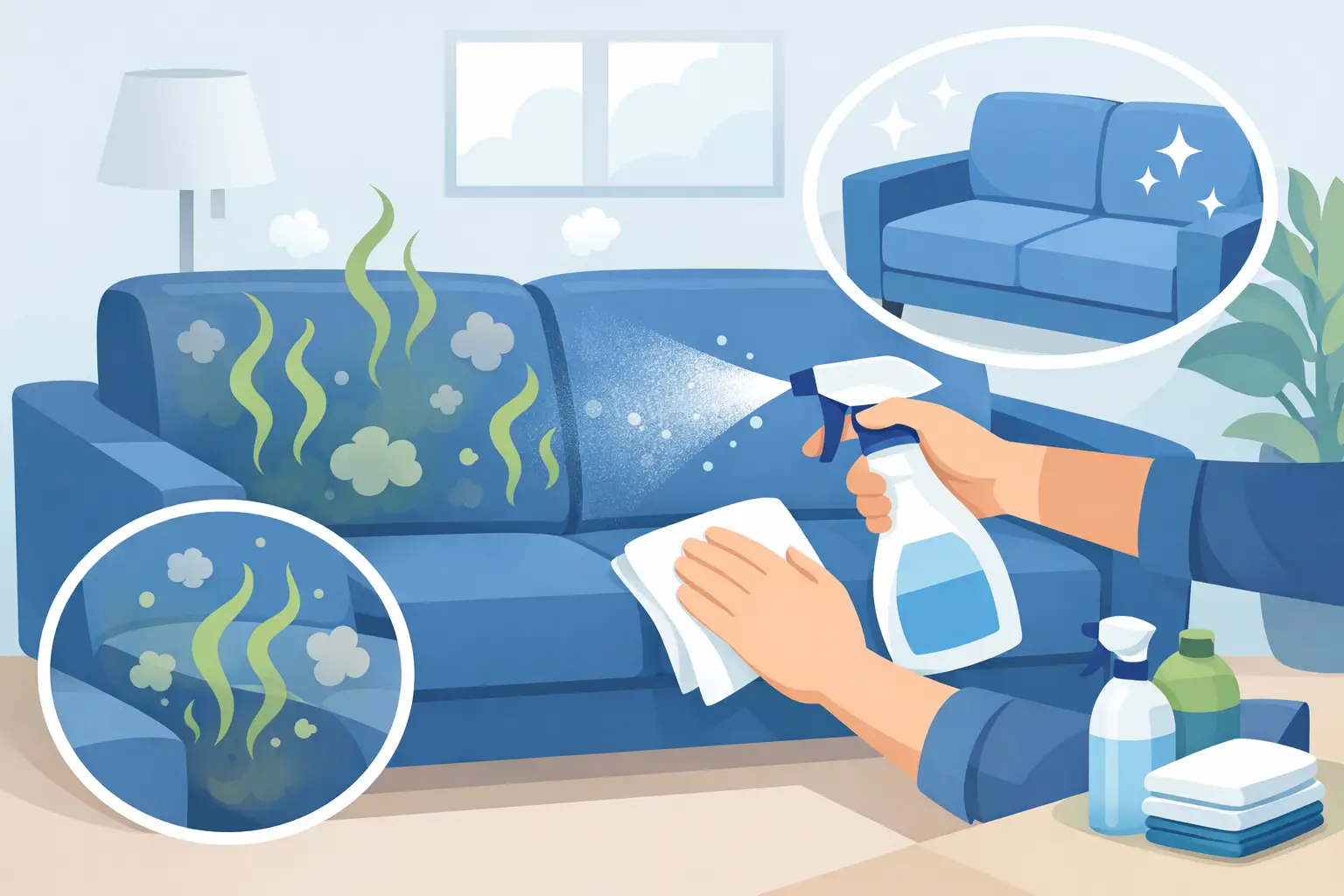
A sofa can look clean while quietly holding onto cooking smells, pet odors, humidity, spills, and everyday body oils. Knowing how to remove bad odors from sofas and upholstery helps protect the freshness of your home, especially in Doha, where closed windows, air conditioning, dust, and humidity can make trapped smells linger longer.
Thank you for reading this post, don't forget to subscribe!The right solution depends on what caused the odor and what fabric covers your furniture. A light musty smell may respond well to careful airing and surface cleaning. A sour, persistent, or urine-like odor often means the padding underneath needs deeper treatment. The goal is not to cover the smell with fragrance. It is to remove the source safely without damaging the upholstery.
Start by Finding the Source of the Smell
Before using any product, take a few minutes to inspect the sofa. Remove cushions where possible and check the seams, gaps, armrests, and the area beneath each cushion. Crumbs, spilled drinks, pet accidents, damp cloths, and food wrappers can all create odor problems that return after a quick clean.
Smell each section individually. If one cushion has a much stronger odor than the rest, treat that area first. Look for stains, damp patches, discoloration, or signs that a spill has reached the foam. If the odor seems to come from the entire sofa, dust, sweat, cooking residue, or accumulated moisture may be the cause.
Also check the care label. Upholstery often has cleaning codes that guide what is safe to use. “W” generally allows water-based cleaning, while “S” calls for solvent-based products. “WS” may allow either method, and “X” means vacuuming or professional cleaning is the safest choice. When the label is missing or unclear, test any method in a hidden spot first.
How to Remove Bad Odors From Sofas and Upholstery at Home
For mild, everyday odors, a careful home routine can make a noticeable difference. Work slowly and avoid soaking the fabric. Too much moisture can push a small issue deeper into the padding and create a musty smell later.
Vacuum More Than the Visible Surface
Vacuum the complete sofa using an upholstery attachment. Go over the seat cushions, back cushions, arms, sides, seams, and the base underneath the cushions. Use a crevice tool for narrow gaps where hair, crumbs, and dust collect.
This step matters because odor-causing particles often sit below the surface. If you apply deodorizing powder or fabric cleaner before vacuuming, you may simply trap dust and debris in the fabric.
Use Baking Soda for Light Odors
Baking soda can help absorb mild smells from dry upholstery. Sprinkle a thin, even layer over the fabric, paying attention to the areas where people sit most often. Leave it for at least several hours, or overnight if the sofa can remain untouched.
Vacuum thoroughly afterward. This works best for general stale odors, light food smells, and everyday use. It may not solve odors caused by a deep spill, mold, pet urine, or smoke that has settled into the foam.
Do not mix baking soda with vinegar directly on the sofa. The fizz may look active, but the two ingredients largely cancel each other out. More importantly, adding unnecessary liquid can leave upholstery damp and create another odor problem.
Treat Small Stains With a Fabric-Safe Cleaner
If a smell is linked to a recent spill, blot the area with a clean white cloth before it dries further. Do not scrub. Scrubbing can spread the stain, roughen delicate fibers, and push liquid into the cushion filling.
For water-safe fabric, use a small amount of upholstery cleaner or a mild soap solution approved for the material. Apply it to a cloth rather than directly flooding the sofa. Blot the affected area, then use a second clean cloth lightly dampened with plain water to remove residue.
Allow the fabric to dry completely before replacing cushions or sitting on it. Use air conditioning, a fan, or good ventilation to speed drying. In Qatar’s warmer months, keeping a wet sofa closed in a heavily air-conditioned room can allow moisture to remain inside longer than expected.
Address Pet and Urine Odors Quickly
Pet accidents need more than perfume or surface wiping. Urine can travel through the fabric and into the foam, where it continues to smell after the top layer appears clean. An enzyme-based upholstery cleaner may help break down odor-causing residue, provided it is suitable for your sofa fabric.
Blot first, then apply the product according to its instructions. Avoid heat while the area is still untreated, since heat can set protein-based stains and odors. If the smell returns after drying, the spill likely reached the cushion insert or the sofa base and may need professional extraction treatment.
Avoid These Common Sofa Deodorizing Mistakes
Air freshener sprays can make a room smell pleasant for an hour, but they rarely remove an odor from upholstery. Heavy fragrance may also be uncomfortable for children, pets, or anyone sensitive to strong scents.
Steam cleaning is useful for some fabrics, but it is not automatically the right answer. Heat and moisture can damage certain upholstery, cause colors to run, shrink natural fibers, or leave padding wet. Leather, velvet, silk, and some delicate blends require specialized care.
Household disinfectants, bleach, and strong multipurpose cleaners are also risky choices. They can fade fabric, leave sticky residue, and produce harsh fumes indoors. A sofa is close-contact furniture, so safe products and proper drying are just as important as visible results.
When a Professional Upholstery Cleaning Is the Better Choice
A professional clean is worth considering when the odor is strong, recurring, or connected to a deep stain. This is particularly true after a pet accident, spilled milk, water damage, smoke exposure, long-term cooking odors, or a sofa that has been stored in a humid space.
Trained cleaners can assess the fabric, identify the likely source, and use the appropriate cleaning method instead of treating every sofa the same way. Deep extraction can lift embedded dirt and odor residue from areas a home vacuum cannot reach, while controlled drying helps reduce the risk of mildew.
For families in Doha, Lusail, West Bay, Al Rayyan, and nearby areas, professional sofa cleaning can be especially useful before guests arrive, after moving into a new home, or when a sofa needs refreshing without replacing it. Cleaning Company provides upholstery treatments designed around fabric type, household needs, and safe cleaning standards for homes with children and pets.
Keep Your Sofa Fresh Between Deep Cleans
Small habits can prevent odors from becoming a major cleaning job. Vacuum upholstery regularly, clean spills immediately, and avoid leaving wet towels, damp clothes, or food on the sofa. If cushions are removable, rotate them occasionally so one seat does not collect all the body oils and moisture.
Use washable throws in high-use areas, particularly when young children or pets share the sofa. Keep food and strongly scented items away from upholstered furniture where possible. If your home has limited airflow, give cushions time to air out during routine cleaning rather than keeping them compressed under blankets all week.
A fresh sofa should smell neutral, not heavily perfumed. If the odor returns within a day or two of cleaning, trust that sign. It usually means the source is below the fabric and deserves a deeper, more careful treatment. A timely professional upholstery cleaning can restore comfort to the place where your family relaxes most.