
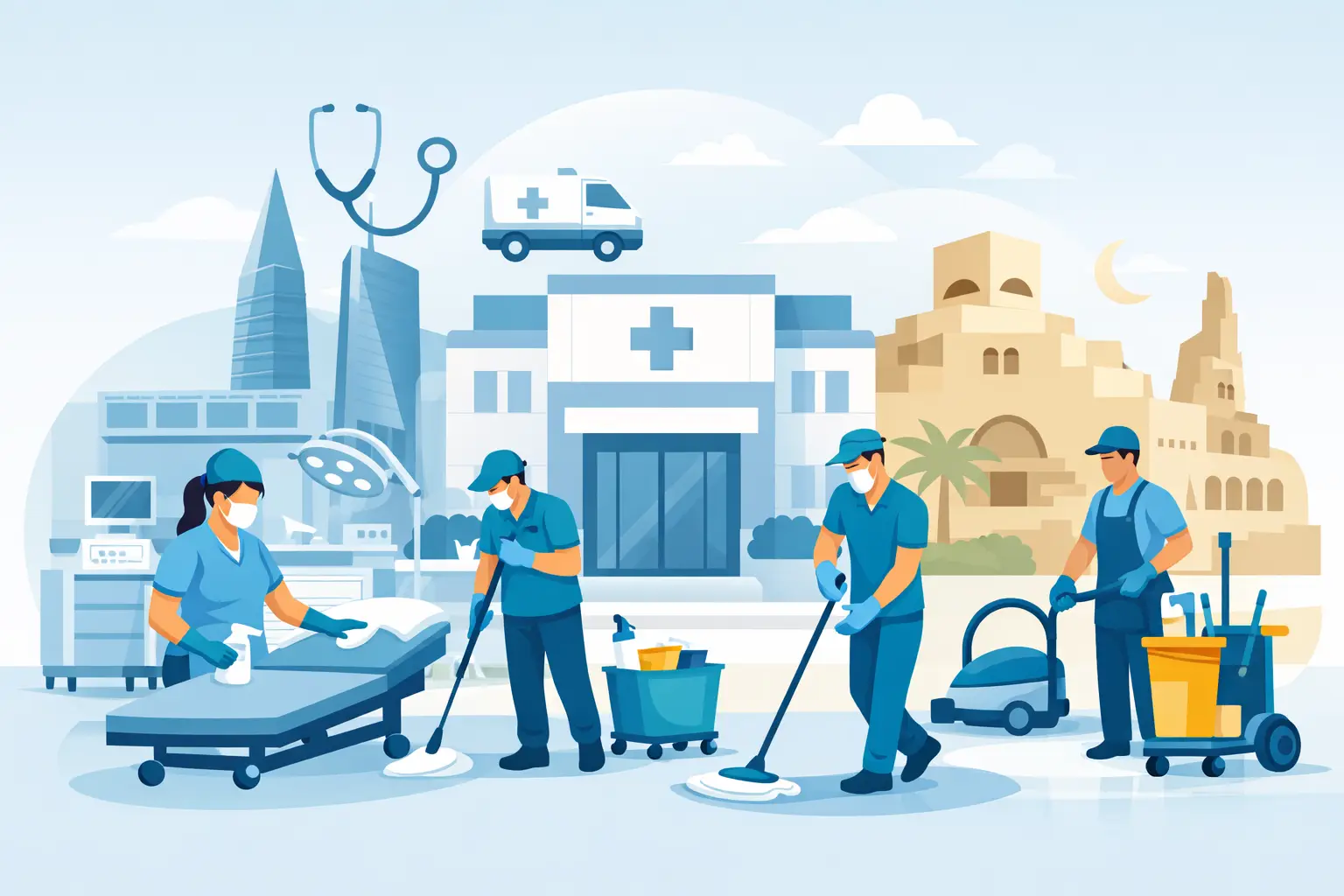
A patient may spend only a few minutes in a waiting room, but those minutes shape their confidence in the clinic. Dust on reception counters, fingerprints on glass doors, unpleasant restroom odors, or an untidy treatment area can make people question the level of care they will receive. Cleaning Services for Clinics & Medical Centers in Qatar help healthcare facilities maintain the clean, calm, professional environment patients expect from the moment they walk in.
Thank you for reading this post, don't forget to subscribe!For clinic managers, the challenge is bigger than making a space look presentable. Medical facilities have steady foot traffic, frequent touchpoints, sensitive work areas, and operating hours that leave little room for disruption. A dependable cleaning plan protects the patient experience, supports staff, and keeps daily upkeep from becoming another task for your front-desk or clinical team.
Why medical cleaning needs a different standard
A regular office can usually be cleaned after business hours with a general checklist. Clinics and medical centers need more careful planning. Reception desks, door handles, lift buttons, payment terminals, waiting chairs, restroom fixtures, consultation rooms, and staff break areas all receive repeated use throughout the day.
The right service separates routine cleaning from targeted disinfection. Cleaning removes visible dirt, dust, and residue. Disinfection focuses on reducing germs on appropriate high-touch surfaces using products and methods suitable for the area. Both matter, but neither should be treated as a substitute for the other.
A good clinic cleaning team also understands boundaries. It should clean the agreed rooms, fixtures, floors, and furnishings without interfering with medical equipment, patient files, supplies, or clinical procedures. Areas with specialized infection-control requirements may need a facility-specific protocol and direction from the clinic’s responsible staff.
Cleaning Services for Clinics & Medical Centers in Qatar
Every facility has a different layout and patient flow. A dental clinic in West Bay, a family practice in Al Rayyan, and a diagnostic center in Doha may all need professional cleaning, but their priorities will not be identical. The most practical plan is built around the spaces your team uses, the number of visitors you receive, and when cleaning can happen without affecting appointments.
Daily cleaning is often the foundation. It keeps floors presentable, restrooms supplied and fresh, waste areas orderly, and shared surfaces cleaned before the next busy period. For high-traffic facilities, daytime touchpoint cleaning can be added between appointments or during quieter hours. This is especially useful for entry doors, reception counters, waiting-room seating, restrooms, and staff areas.
Deep cleaning should be scheduled separately. It gives attention to corners, skirting, vents, upholstery, carpets, wall marks, glass partitions, and buildup that daily cleaning cannot fully address. Carpet and upholstery cleaning can also help refresh waiting areas where dust, spills, and odors tend to collect over time.
Disinfection and sanitation services are valuable after illness concerns, a high-volume period, a move into a new facility, renovation work, or when a center wants an additional hygiene measure. The scope should be clear from the start: which rooms are included, which surfaces are treated, what products are used, and how long the service will take.
What a reliable clinic cleaning plan should cover
The most effective cleaning plans are detailed without being complicated. Before work begins, the provider should walk through the facility or discuss its layout, operating schedule, access arrangements, and priority areas. That conversation prevents the common problem of receiving a generic service that misses the spaces patients and staff notice most.
A typical plan may include reception and waiting areas, consultation rooms, staff offices, pantries, restrooms, corridors, entrances, and internal glass. Floors should receive the correct treatment for their material, whether that means vacuuming, mopping, spot cleaning, or periodic deep cleaning. Restrooms require special consistency because patients often judge the whole facility by their condition.
High-touch surfaces deserve a defined routine rather than occasional attention. Door handles, light switches, reception counters, chair arms, handrails, and shared devices can be cleaned and disinfected at intervals that match patient volume. A small clinic with scheduled appointments may need a different frequency than a medical center with constant walk-ins.
Waste handling also needs a clear division of responsibility. A cleaning company can manage ordinary office and restroom waste as agreed, but clinical, sharps, pharmaceutical, or hazardous waste must follow the facility’s designated handling procedures and applicable requirements. A trustworthy provider will not blur that distinction just to promise more than it can safely deliver.
Choose timing that protects patient care
Punctuality matters in every workplace. In a clinic, it matters even more because a late or poorly timed cleaning visit can interrupt consultations, create noise near treatment rooms, or leave wet floors where patients are moving. Flexible scheduling is part of good service, not an extra detail.
Many facilities choose cleaning before opening, after closing, or during a planned low-traffic period. Others need a cleaner on site during business hours for restrooms, waiting spaces, and immediate spills. The best option depends on your opening hours, staff availability, and the level of daily foot traffic.
A simple written checklist helps everyone stay aligned. It should identify the rooms to be cleaned, frequency, access instructions, supplies provided by the cleaning team, and the person to contact if a concern arises. It also makes quality easier to review. If the reception glass is repeatedly missed or a restroom needs more frequent attention, the schedule can be adjusted quickly.
Products, people, and trust inside your facility
Clinics are personal spaces. Patients share private health concerns, and staff need to work without worrying about unfamiliar people moving through restricted areas. That is why trained, professional cleaners and clear access procedures matter as much as the cleaning itself.
Ask whether the team uses suitable products for the surfaces in your facility and whether eco-friendly options are available where appropriate. Child- and pet-safe products can be a thoughtful choice for family clinics and pediatric waiting areas, but they should still be selected for the job at hand. Strong fragrance is not proof of cleanliness, and a product that is wrong for a surface can cause damage or leave residue.
Consistency is equally valuable. A team that understands your layout, priorities, and schedule is more likely to notice when consumables are low, a spill needs prompt attention, or a usually quiet area requires extra cleaning. Professional cleaning should reduce the amount of supervision your staff needs to provide, not create more of it.
When to arrange deep cleaning or extra support
Routine service keeps a clinic in good condition, but certain situations call for more focused work. A move into a new unit, a lease handover, construction dust, a busy seasonal period, an inspection, or an upcoming event are all reasons to book a deeper clean.
Watch for signs that daily cleaning is no longer enough: persistent odors, dull-looking floors, stained upholstery, dusty vents, marks around walls and doors, or restrooms that lose their fresh appearance quickly. These issues can build gradually, which is why periodic deep cleaning is often easier and more cost-effective than waiting until the facility looks neglected.
Cleaning Company can tailor recurring, one-time, deep cleaning, carpet cleaning, upholstery cleaning, and sanitation support around your clinic’s schedule in Doha and surrounding areas. The goal is straightforward: a clean facility that feels cared for without adding pressure to your medical or administrative staff.
A well-maintained clinic tells patients that their comfort matters before they speak to a receptionist or meet a doctor. With a clear scope, trained cleaners, suitable products, and reliable timing, your facility can stay ready for the next patient, every day.