
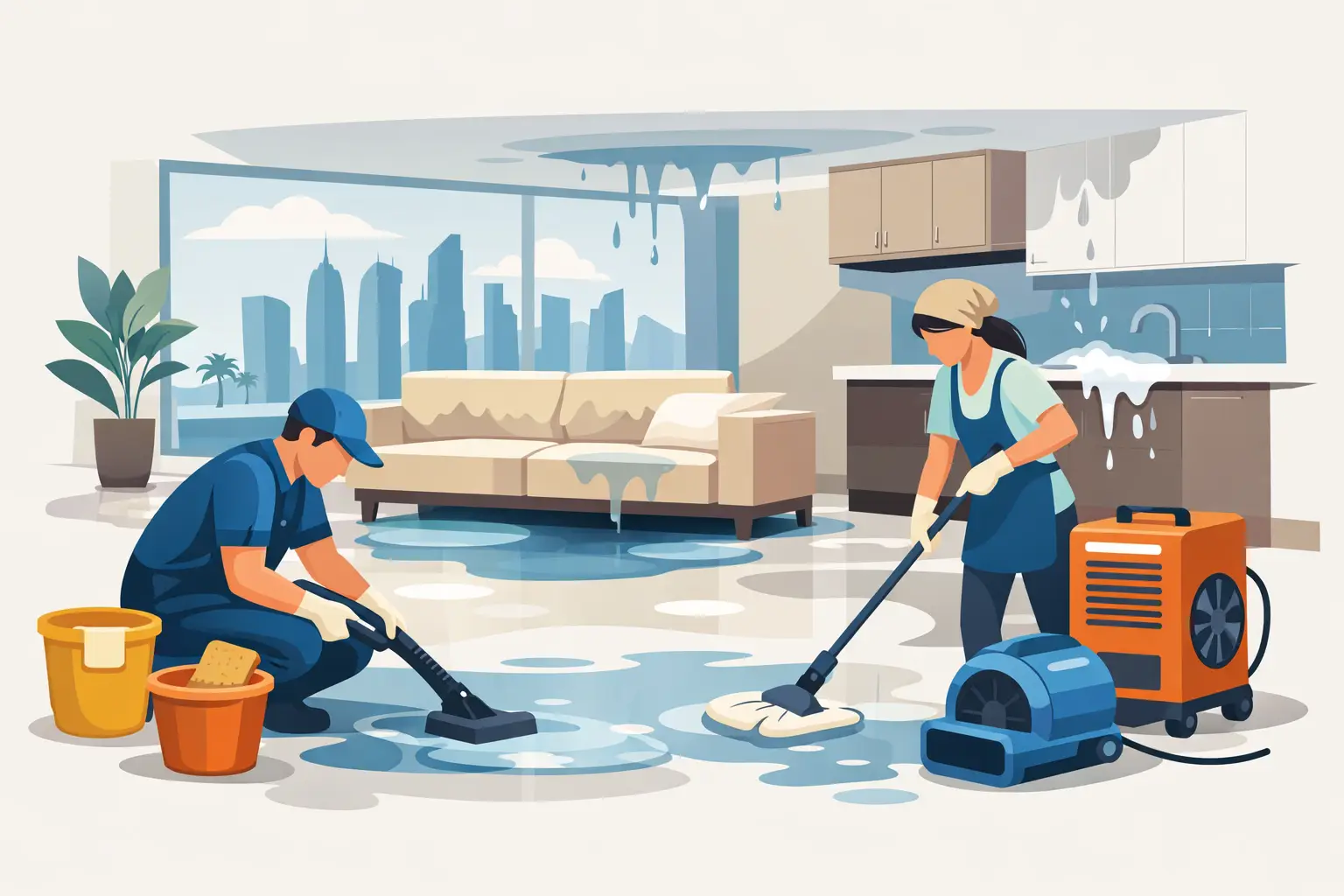
A small leak can turn into a serious cleaning problem faster than most homeowners expect. In Qatar, indoor moisture can linger in hidden places like under flooring, behind baseboards, and inside upholstered furniture, which means cleaning after water leakage Qatar homes requires more than mopping up visible water.
Thank you for reading this post, don't forget to subscribe!The right response protects your floors, furniture, air quality, and overall hygiene. It also helps reduce the chance of staining, odors, mold growth, and long-term damage. If the leak came from a pipe, AC unit, appliance, or bathroom overflow, the first few hours matter most.
What to do first after a leak
Before any cleaning starts, stop the source of the water if you can do so safely. Shut off the local water supply, switch off affected electrical circuits if water is near outlets or appliances, and move people and pets away from the area. Safety comes first, especially if the leak reached wiring, power strips, or built-in kitchen equipment.
Once the area is safe, remove standing water as quickly as possible. Towels may help for a very small leak, but larger spills usually need wet vacuum extraction or professional equipment. The goal is simple: get as much water out as possible before it soaks deeper into surfaces.
After that, move lightweight furniture, rugs, boxes, and fabrics away from the wet area. Leaving wet items in place traps moisture and slows drying. If wood furniture legs are standing in water, lift them immediately to reduce staining and swelling.
Cleaning after water leakage in Qatar homes starts with assessment
Not every leak causes the same kind of contamination. Clean water from a supply pipe is different from water from a washing machine backup, toilet overflow, or roof intrusion carrying dirt and debris. This affects how the area should be cleaned and disinfected.
A simple way to assess the situation is to ask three questions. Where did the water come from? How long has it been sitting? What materials were affected? If the answer includes contaminated water, more than 24 hours of soaking, or absorbent materials like carpets, mattresses, and gypsum board, the cleanup usually needs deeper treatment.
This is where many people underestimate the job. A floor may look dry on top while moisture remains underneath. That hidden dampness can lead to odor, staining, and microbial growth later. A proper assessment checks not just surfaces, but also what sits below them.
How to clean different surfaces properly
Hard flooring can often be cleaned successfully if action is taken quickly. Tile and sealed surfaces should be extracted, washed with an appropriate cleaning solution, and dried thoroughly. Grout lines need extra attention because they hold moisture longer than the tile itself.
Wood and laminate need more caution. Too much water or delayed drying can cause lifting, warping, and separation. These floors should never be flooded with cleaning solution. Instead, use controlled moisture, gentle surface cleaning, and strong drying support with air movement and dehumidification.
Carpets are more complicated. Even if the top fibers feel only slightly damp, the underlay may be holding a large amount of water. Without extraction and fast drying, carpets can develop musty odors and become difficult to restore. In many cases, carpet cleaning in doha after a leak should include water extraction, antimicrobial treatment where appropriate, and deep drying rather than standard shampoo cleaning.
Sofas, curtains, mattresses, and other soft furnishings also need careful handling. Some items can be restored if treated early, while others may remain at risk if contamination is present or moisture has spread into the inner padding. Upholstery that smells sour or remains damp after surface drying usually needs professional attention.
Drying matters as much as cleaning
One of the biggest mistakes after a household leak is cleaning without fully drying. Surface cleaning may make a room look better, but if humidity remains trapped inside materials, the problem is only delayed.
Open windows only if outdoor conditions help rather than worsen indoor humidity. Use fans to improve air circulation, but remember that fans alone do not remove moisture from the air. Dehumidifiers are often the key to bringing moisture levels down to a safe range, especially in enclosed rooms.
Drying should continue until the affected area is dry all the way through, not just dry to the touch. Depending on the size of the leak and the materials involved, that can take a day or several days. Rushing this stage often leads to repeat cleaning, persistent odor, or hidden mold later.
When disinfection is necessary
Not every water leak needs aggressive disinfection, but some absolutely do. If the leak involved bathroom overflow, kitchen waste water, drain backups, or water that sat long enough to become stagnant, disinfection is part of the cleanup process.
The disinfectant must also match the surface. A strong chemical that works on tile may not be suitable for upholstery, wood, or child-sensitive areas. For family homes, especially those with children or pets, product safety matters. The best approach is effective disinfection without leaving behind harsh residues or strong odors.
Professional cleaners usually separate the process into extraction, cleaning, sanitizing where needed, and complete drying. That sequence matters. Applying disinfectant to a still-soaked surface is rarely enough on its own.
Signs the leak caused deeper damage
Sometimes the cleaning job is straightforward. Other times, the leak points to a larger problem hiding inside walls, ceilings, or flooring systems. If you notice bubbling paint, swollen skirting, ceiling stains, warped doors, peeling laminate, or a persistent damp smell, there may be trapped moisture beyond the visible area.
That is especially common with AC leaks, slow pipe leaks, and repeated bathroom seepage. The area may dry on the surface but remain wet inside structural layers. In those cases, professional inspection and targeted deep cleaning are usually more effective than repeated surface treatment.
If mold spotting appears, do not simply paint over it or wipe it with a random cleaner and hope for the best. The cause of the moisture has to be addressed, and the affected area has to be cleaned correctly. Otherwise, the issue often returns.
When to handle it yourself and when to call professionals
A very small, clean-water leak caught immediately on a hard, non-porous surface can often be handled at home. If the area is limited, there is no contamination, and everything dries fast, basic cleanup may be enough.
Professional help makes more sense when water has spread into carpets, sofas, mattresses, wood flooring, wall edges, or multiple rooms. The same is true if the leak happened while the property was empty and the water sat for hours, or if there is any concern about odor, staining, or hygiene.
For busy households and working professionals, calling a trained cleaning team can also save time and reduce the risk of incomplete drying. A proper service should include assessment, water removal, deep cleaning of affected surfaces, safe products, and drying support. That is often the fastest path back to a spotless, hygienic, and fresh home.
Preventing repeat problems after cleanup
Good cleanup solves the immediate issue, but prevention keeps it from happening again. Once the area is restored, inspect the original cause. Check appliance hoses, AC drainage, bathroom sealants, under-sink connections, and any previous leak-prone spots.
It also helps to monitor the area for a few days after cleaning. If the smell returns, if surfaces feel cool and damp, or if discoloration reappears, the space may not be fully dry. Early follow-up is much easier than dealing with a second round of damage.
Routine deep cleaning can also help spot warning signs sooner. Hidden grime, dust buildup, and neglected corners often make it harder to notice early staining or moisture marks. A professional team with experience in residential cleaning can identify these issues before they become larger repair problems.
For homeowners and tenants, the main takeaway is simple. Fast action, proper cleaning, and complete drying are what protect your home after a leak. If the water has affected more than the surface, treating it like a basic spill is usually not enough. In homes across Doha, prompt professional cleaning after water damage can make the difference between a quick recovery and a much more expensive problem a week later.