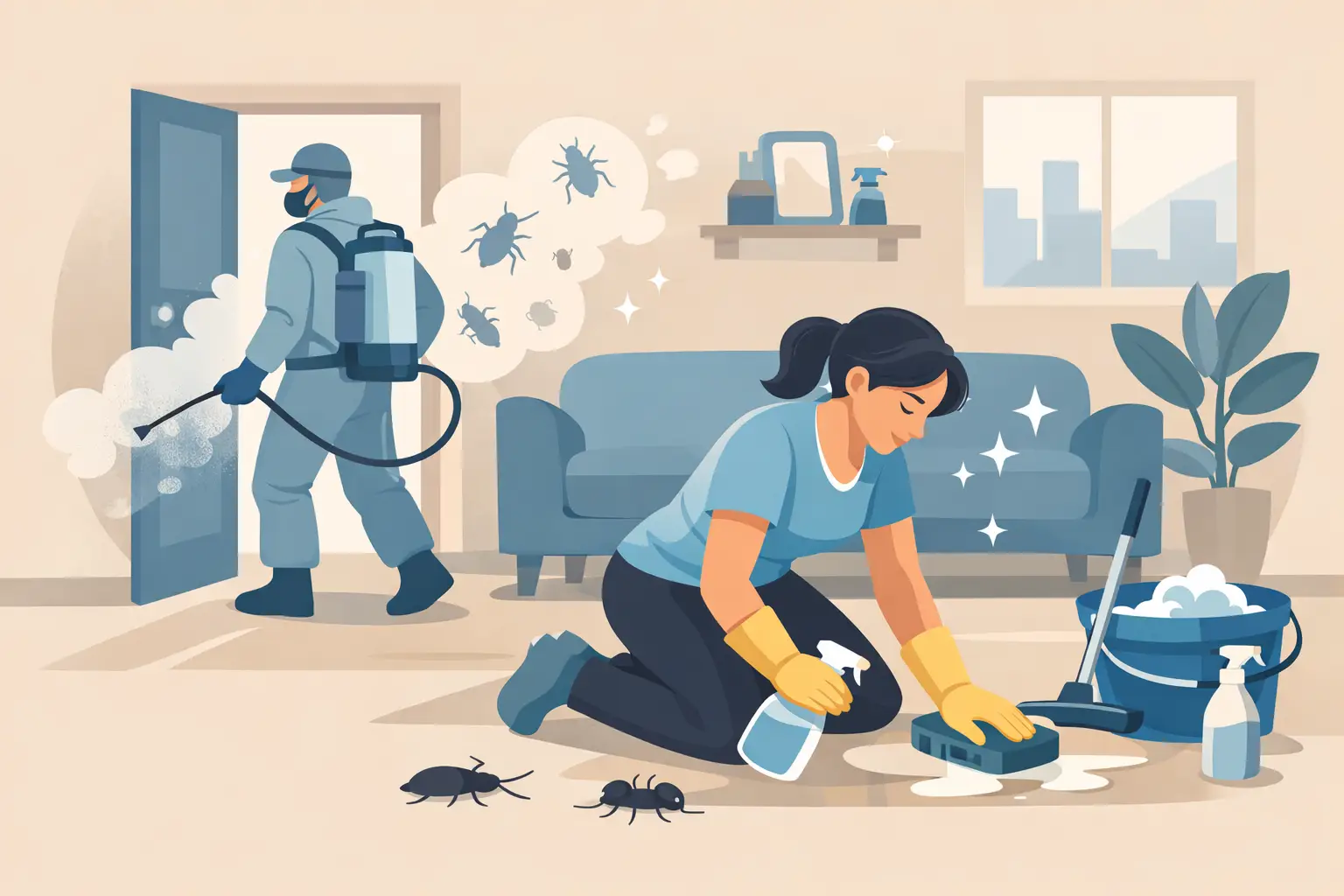
The first mistake people make after a pest control visit is cleaning too soon. It feels logical to wipe everything down right away, especially if you have children, pets, or food preparation areas to think about. But when it comes to Cleaning after pest control treatment Qatar, timing matters. If you clean the wrong surfaces too early or use the wrong products, you can reduce the treatment’s effectiveness and bring the pest problem back faster.
Thank you for reading this post, don't forget to subscribe!What you should do next depends on the type of treatment used, the area treated, and whether the service was for a home, apartment, office, kitchen, or commercial space. A light spray treatment for crawling insects is not handled the same way as gel baiting, fumigation, or a targeted treatment in cracks and corners. That is why the safest approach is always to follow the technician’s instructions first, then clean with purpose instead of cleaning everything at once.
When to start cleaning after pest control treatment Qatar
In most cases, you should wait until the recommended re-entry time has passed before going back inside and starting any cleaning. That period may be a few hours or longer depending on the treatment. Once it is safe to re-enter, resist the urge to do a full deep clean on the same day unless the technician has confirmed it is fine.
For many common pest control treatments, immediate cleaning is limited to essential contact points such as dining tables, kitchen counters, food prep surfaces, and exposed areas where children or pets may touch regularly. Floors, skirting edges, wall corners, under-sink spaces, and other treated zones are often left untouched for longer so the product can continue working.
If the treatment involved bait stations or gel applications, cleaning too aggressively can remove or disturb the material that attracts pests. In those situations, a neat-looking space is less important than allowing the treatment to do its job. A short delay in detailed cleaning often gives better long-term results.
What you can clean right away
The surfaces you can usually clean first are the ones directly linked to hygiene and daily use. Kitchen worktops, dining tables, stovetops, and sink rims should be wiped before preparing food. Use a mild cleaner and a damp cloth rather than soaking the area. The goal is to remove any residue from exposed touchpoints without spreading product around or scrubbing treated cracks and edges.
Bathrooms can also be cleaned selectively. Sink counters, toilet seats, faucet handles, and shower controls are high-contact areas and can be wiped as needed. Again, avoid scrubbing along corners, drains, pipe entry points, or hidden pest pathways if those were treated.
In offices, desks, meeting tables, pantry counters, and door handles may need a light wipe-down before staff return. Shared spaces should feel clean and safe, but pest treatment zones such as baseboards, storage areas, and backend utility sections should generally be left alone for the advised period.
What should not be cleaned too soon
This is where many treatments lose effectiveness. Pest control products are often applied exactly where pests travel, hide, or nest. If those zones are washed immediately, the protective barrier is weakened or removed.
Avoid mopping directly along wall edges right away. Do not vacuum treated corners unless instructed. Do not scrub behind appliances, inside cabinet hinges, or around entry points where ants, cockroaches, or other pests are likely to pass. If you notice powder, gel, or a thin sprayed line in a specific spot, leave it alone unless it is in a place that creates direct safety concerns.
Soft furnishings also need common sense. If the treatment was not applied to sofas, curtains, mattresses, or carpets, there is usually no need to wash them immediately. If those items were specifically treated, ask how long to wait before vacuuming or shampooing. Cleaning fabric too early can cancel out the benefit of the service.
How to clean safely in homes with children and pets
Families are often most concerned about safety, and that concern is valid. The good news is that safe pest control and careful post-treatment cleaning can work together. Start by ventilating the space if advised. Open windows where possible and let fresh air circulate before children and pets return to normal activity in the area.
Focus first on surfaces they touch often. Wipe tabletops, armrests, feeding areas, and reachable counters. Wash pet bowls before refilling them and replace any food that was left uncovered during treatment. If toys, pacifiers, or pet items were exposed, wash them before use.
At the same time, try not to over-clean hidden treatment zones. A common balance is this: clean direct-contact surfaces for safety, leave pest pathways in place for effectiveness. If you are unsure whether a spot falls into one category or the other, ask before cleaning it.
Kitchen cleaning after pest control
Kitchens need a more careful approach because hygiene and pest prevention are closely connected. Before using the kitchen normally, wipe all food preparation areas, clean any exposed utensils, and check that stored food is sealed properly. If any food was left uncovered during treatment, it is safer to discard it.
Cabinets should not be emptied and washed unnecessarily unless they were part of the treatment plan or there is visible contamination. In many cases, the better move is to keep cabinets dry, organized, and free from crumbs rather than doing a full wash that may disturb targeted treatment points.
This is also a good time to fix the conditions that attract pests in the first place. Clean grease buildup, empty trash promptly, repair leaks, and keep food in sealed containers. Pest control works best when paired with consistent hygiene.
Cleaning floors, carpets, and upholstery
Floors are usually where people want the clearest answer. Can you mop after pest control? Usually yes, but not everywhere and not immediately. Open floor areas may be lightly cleaned once it is safe, especially in living rooms, entrances, and workspaces. The edges of rooms, however, are often part of the treatment line and should be left alone for the recommended period.
If you vacuum too early, you may remove product from corners, under furniture, and along skirting boards. For carpets and rugs cleaning, timing depends on whether they were treated directly or simply nearby. A routine vacuum in the center of a room may be fine sooner than edge cleaning or deep carpet washing.
Upholstery should only be cleaned if there was direct exposure or a specific reason to do so. In most cases, a standard pest treatment focuses on structural areas rather than the fabric itself. Over-cleaning furniture right away is usually unnecessary.
Homes versus offices: the cleaning plan is not the same
Residential and commercial spaces need different post-treatment routines. In homes, the priority is balancing treatment effectiveness with daily family use. In offices, the goal is often to make shared spaces ready for staff while protecting treatment zones in storage rooms, kitchenettes, server areas, or utility spaces.
That means an office manager may choose to sanitize desks, pantry counters, restrooms, and reception areas while delaying detailed floor-edge cleaning until later. A homeowner may do the same with dining areas, bathrooms, and visible touchpoints while leaving treated corners untouched. The principle is the same in both settings: clean what people use, preserve what controls pests.
Signs you are cleaning too much after treatment
If you are unsure whether your cleaning routine is helping or hurting, there are a few warning signs. One is when every treated area has been washed within 24 hours. Another is when strong detergents are used on floors, corners, and entry points immediately after the service. A third is when bait placements disappear because they were wiped away during routine cleaning.
You may also notice pests returning unusually fast. While no treatment works instantly in every case, quick reappearance can happen when the active product has been removed before it had time to work properly.
The best next step if you are not sure
The right answer is not always a generic checklist. It depends on the pest involved, the treatment method, and the layout of the property. That is why professional aftercare matters almost as much as the treatment itself. A dependable provider should tell you when to re-enter, what to wipe down first, what to leave alone, and when full cleaning can resume.
If you have booked pest control for a villa, apartment, office, or shop in Doha, ask for clear post-treatment instructions before the team leaves. That small step prevents wasted treatment, unnecessary risk, and a lot of avoidable stress. For many customers, the easiest option is working with one provider that can manage both pest control and the follow-up cleaning in a way that keeps the space spotless, hygienic, and fresh without interfering with results.
Good pest control does not end when the technician walks out the door. The cleanup that follows should protect your family, support the treatment, and help keep the problem from coming back.