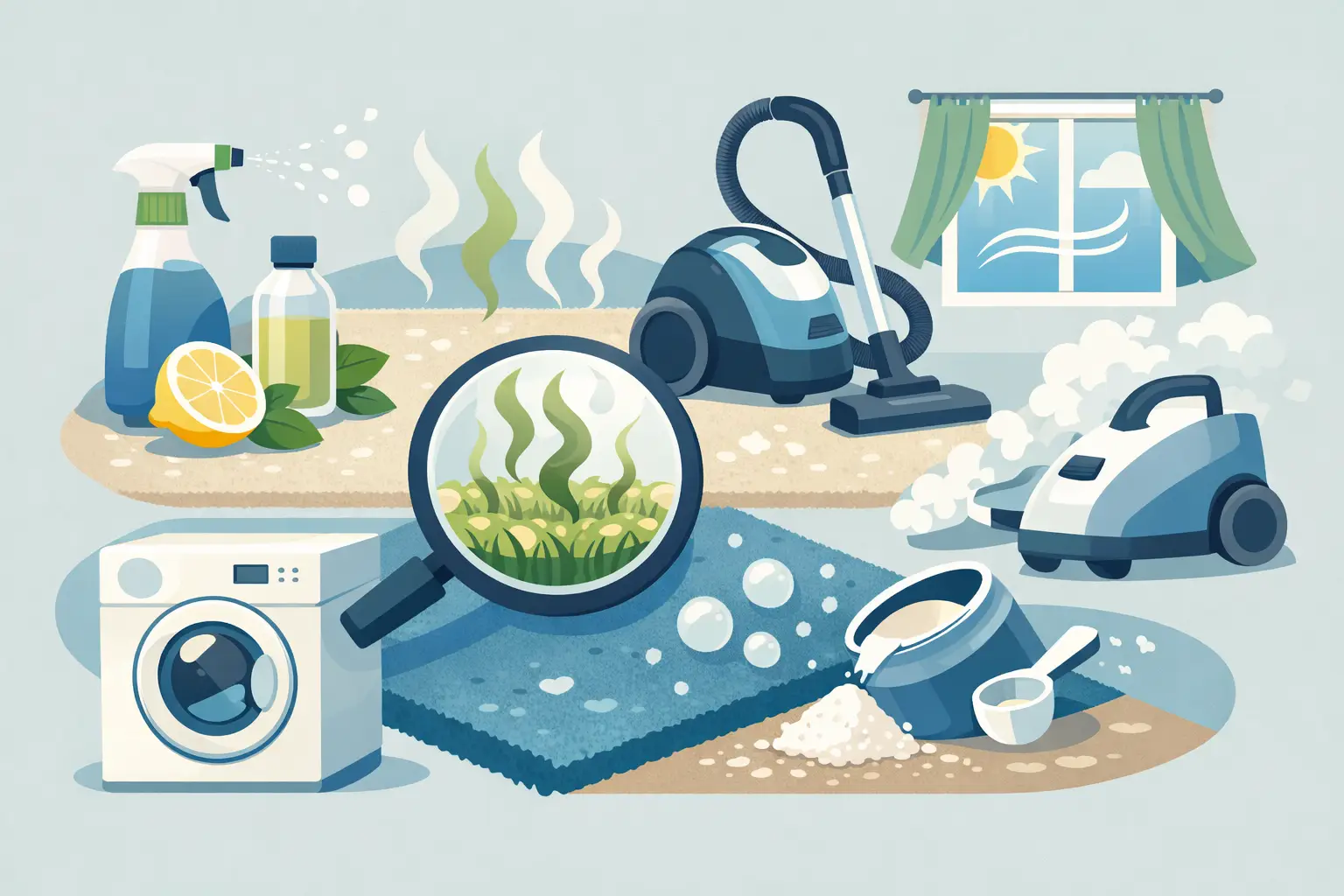
That stale smell usually shows up before the stain does. A carpet can look fairly clean and still hold onto pet accidents, food spills, humidity, dust, or bacteria deep in the fibers. The most effective carpet odor removal methods address the source of the smell, not just the air above it.
Thank you for reading this post, don't forget to subscribe!If you are dealing with a light musty odor in a bedroom rug or a stronger smell in a busy office, the right fix depends on what caused it and how long it has been there. Some odors respond well to simple at-home treatment. Others need a deeper cleaning process to remove buildup from the carpet backing and underlay.
Carpet odor removal methods for different problems
Not all carpet smells come from the same place. Food and drink spills tend to create sour odors over time. Pet accidents often leave behind ammonia-like smells that return in humid conditions. Moisture can lead to mildew, while heavy foot traffic can trap a mix of dust, oils, and everyday grime.
That is why a single scented spray rarely solves the problem. It may cover the odor for a few hours, but the source remains in the carpet. Good odor control starts with identifying whether the smell is surface-level, moisture-related, or absorbed deep into the fibers.
1. Vacuuming thoroughly to remove trapped debris
This sounds basic, but it is often skipped or done too quickly. Dust, crumbs, hair, and organic debris settle deep into carpet pile and start to smell over time, especially in homes with children or pets and in office spaces with constant foot traffic.
A slow, thorough vacuum pass can make a noticeable difference if the odor is mild. Focus on edges, corners, and under furniture where buildup collects. If the carpet has a dense pile, go over each section more than once. Vacuuming will not remove deep-set odor on its own, but it is the first step before any treatment because it clears the surface and helps deodorizing products work better.
2. Baking soda for general odor absorption
Baking soda remains one of the most practical methods for mild carpet odors. It helps absorb lingering smells rather than masking them with fragrance. This works best for general staleness, light food odors, and rooms that have been closed up for too long.
Sprinkle a light, even layer over the carpet and leave it in place for several hours, or overnight if possible. Then vacuum it up carefully. The trade-off is that baking soda helps with mild odor problems, not severe contamination. If the carpet smells strongly of urine, mildew, or spill residue, baking soda may improve it without fully solving it.
3. White vinegar solution for sour or musty smells
A diluted white vinegar solution can help neutralize some odor-causing residue, especially from food spills or dampness. Used correctly, vinegar does not leave the carpet smelling like vinegar for long. As it dries, the smell fades.
The key is restraint. Lightly mist the affected area instead of soaking it. Overwetting the carpet can create a bigger issue by driving moisture deeper into the backing. For that reason, this method is better for small areas and spot treatment, not for large sections of wall-to-wall carpet.
4. Enzyme cleaners for pet-related odors
For pet accidents, enzyme-based products are usually the better choice. They break down the organic matter causing the odor instead of simply covering it. This is especially useful when a carpet continues to smell clean at first, then unpleasant again later.
Enzyme cleaners need enough contact time to work. If they are wiped away too fast, the odor may remain. It also helps to blot up as much moisture as possible before applying the product. If the accident reached the padding underneath, even a good enzyme cleaner may not fully remove the smell without deeper extraction.
When steam cleaning helps and when it does not
Steam cleaning, or hot water extraction, is one of the more effective carpet odor removal methods when the smell comes from trapped dirt, body oils, spill residue, or general buildup. It flushes out contaminants that vacuuming cannot reach and leaves the carpet noticeably fresher when done properly.
Still, results depend on technique. Too much water, poor suction, or inadequate drying can leave moisture behind and create musty odors afterward. That is why professional equipment often performs better than small rental units or household machines. Stronger extraction means less residue and faster drying.
5. Hot water extraction for deep odor removal
This method is often the right choice when odor is spread across a room rather than isolated to one small spot. It works well for family homes, offices, meeting rooms, and furnished spaces where carpets collect daily use over time.
Deep extraction is also a practical choice before move-in, after move-out, or during seasonal deep cleaning. If the carpet has not been professionally cleaned in a long time, a deep wash can remove hidden buildup that contributes to a dull or stale smell.
6. Dry carpet cleaning for faster turnaround
In some settings, especially commercial spaces, dry carpet cleaning can be the better option. It uses lower moisture and allows carpets to return to use more quickly. That matters in offices, retail environments, and busy households that cannot leave carpets damp for long.
The trade-off is that dry methods may not be enough for serious odor caused by heavy staining, pet urine, or mildew. They are useful for maintenance and refresh cleaning, but severe odor problems usually need deeper treatment.
Moisture is often the real problem
If a carpet smells musty even after cleaning, trapped moisture is often the issue. This can come from spills, over-wetting during DIY cleaning, air conditioning leaks, or poor drying conditions. In humid indoor environments, that smell can return quickly if the carpet backing remains damp.
7. Drying and ventilation as part of odor control
Proper drying is not a separate extra. It is part of the cleaning process. Open airflow, fans, dehumidification, and limiting foot traffic while the carpet dries all help prevent odors from coming back.
This is one reason professional service can save time and frustration. A trained team can assess whether the smell is only in the top fibers or whether moisture and contamination have moved deeper. In Doha, where indoor cooling and humidity can affect how fabrics dry, that assessment matters more than many people realize.
When home treatment is enough
If the odor is light, recent, and limited to a small area, home treatment may be enough. A spill that was cleaned quickly, a room that simply smells closed up, or a carpet that needs deodorizing after routine use can often improve with vacuuming, baking soda, or targeted spot treatment.
The best signs that DIY methods may work are simple: the odor is not getting stronger, there is no visible moisture problem, and the smell improves after cleaning instead of returning within a day or two.
When to call a professional
Some smells keep coming back for a reason. If you notice odor after pet accidents, old stains, repeated spills, water exposure, or long-term neglect, professional treatment is usually the more effective option. The same applies if the smell covers a large area or affects a workplace where cleanliness and presentation matter.
A professional cleaning service can identify whether the issue is residue, bacteria, moisture, or contamination below the surface. That matters because the wrong cleaning method can waste time and, in some cases, make odor worse by adding more moisture or spreading the residue.
For homes and businesses that need dependable results, professional carpet cleaning is less about fragrance and more about proper removal. That is the standard Cleaning Company focuses on – leaving carpets spotless, hygienic, and fresh rather than temporarily masked.
How to keep carpet odors from returning
Prevention is usually easier than repeated odor removal. Vacuuming on a consistent schedule helps reduce the dirt and organic debris that create smells over time. Quick action after spills matters just as much. The longer moisture and residue stay in the carpet, the harder they are to remove.
For homes, simple habits like removing shoes indoors, using mats at entrances, and scheduling periodic deep cleaning can make a big difference. In offices and commercial spaces cleaning, routine maintenance matters even more because foot traffic pushes dirt deeper into the fibers every day.
It also helps to avoid overusing scented powders and sprays. These can create buildup, trap residue, and make later cleaning more difficult. Fresh carpet should smell clean, not heavily perfumed.
A carpet that smells bad is usually telling you something useful. Sometimes it needs a quick refresh. Sometimes it needs deeper treatment from people with the right equipment and experience. The real fix is choosing the method that matches the cause, so the clean smell lasts longer than a single afternoon.