
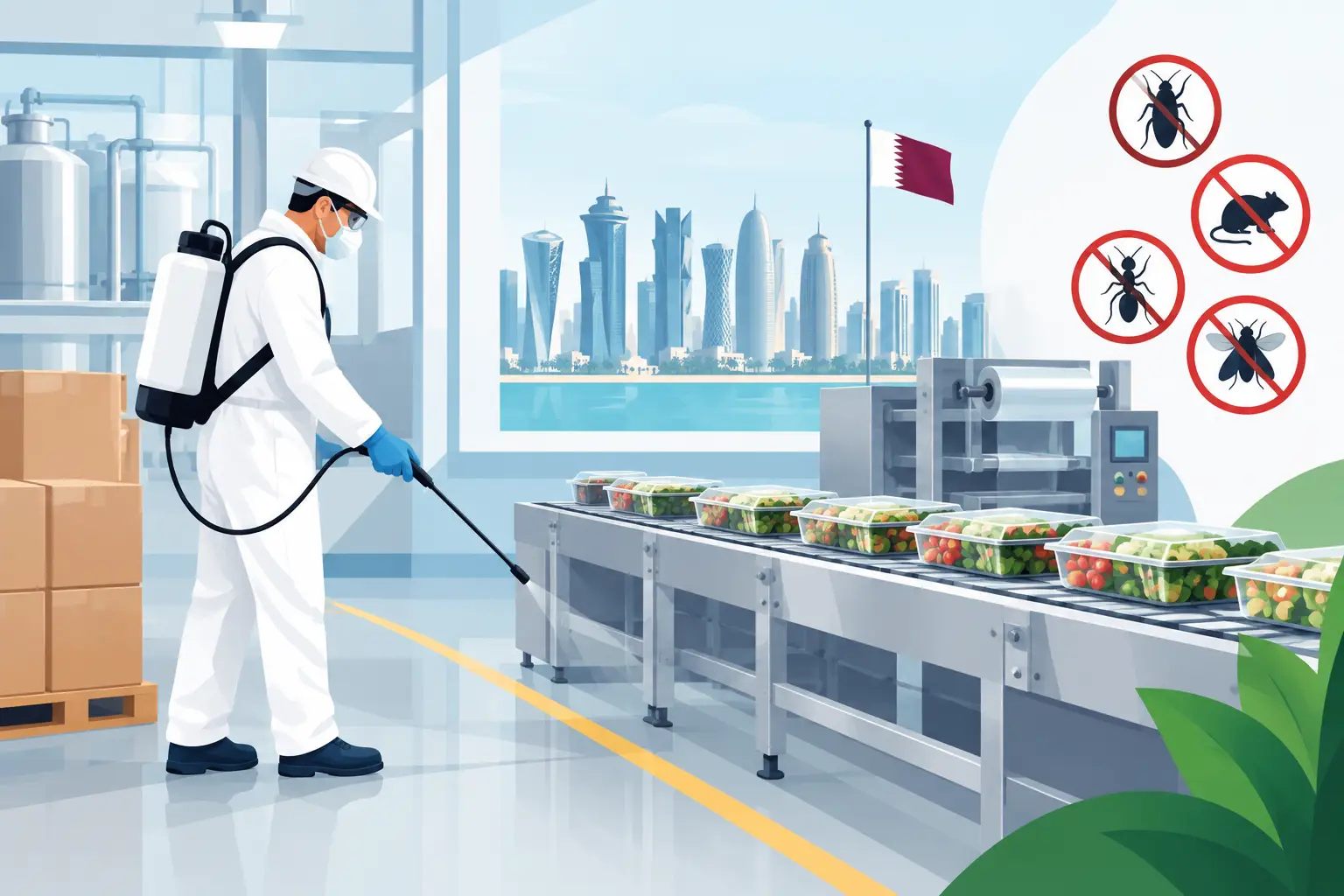
A single cockroach near a packing line can create far more than an unpleasant sight. It can put product safety, customer confidence, audit results, and production schedules at risk. Pest control for food packaging and manufacturing facilities in Qatar needs to be planned around your operation, not handled as a last-minute spray after pests are already visible.
Thank you for reading this post, don't forget to subscribe!Food plants, warehouses, bakeries, bottling operations, and packaging facilities face constant pressure to keep raw materials, finished goods, and work areas protected. Qatar’s heat, delivery traffic, stored stock, drainage points, and building gaps can all create opportunities for pests to enter and settle. A dependable prevention program keeps the site cleaner, safer, and easier to manage every day.
Why Food Facilities Need Specialized Pest Control
A food-related facility cannot use the same approach as a standard office or home. Treatments must be selected and placed carefully to avoid disrupting production, contaminating exposed materials, or creating unnecessary downtime. The goal is not simply to remove pests you can see. It is to find how they entered, what is supporting them, and where activity could develop next.
Common risks include cockroaches in warm equipment areas, ants near sweet ingredients and wash zones, rodents around loading bays and external storage, flies near waste areas and drains, and stored-product insects in dry goods. Even a small issue can spread through cartons, pallets, utility rooms, ceiling voids, and stock areas if it is ignored.
For facility managers, the cost is rarely limited to the pest treatment itself. A pest sighting can lead to rejected stock, extra cleaning, staff concern, customer complaints, or difficult questions during a food-safety inspection. Consistent control is a practical way to protect the standards your team works hard to maintain.
Pest Control for Food Packaging and Manufacturing Facilities in Qatar
The right program begins with a detailed site inspection. A trained technician should look beyond the obvious floor areas and inspect entry points, dock doors, waste zones, drains, wall gaps, storage racks, equipment bases, false ceilings, and exterior perimeters. These hidden areas often reveal the real cause of repeat pest activity.
At Cleaning Company, we understand that food and packaging operations need service that is thorough, punctual, and organized around their working hours. Our team can schedule visits to reduce disruption and provide a practical plan based on the size, layout, and risk areas of your facility.
A strong pest-control plan normally combines sanitation support, exclusion work, monitoring, targeted treatment, and follow-up inspections. No single method works forever on its own. For example, treatment can reduce cockroach activity quickly, but an unsealed pipe opening or a damp drain may continue attracting them. Similarly, rodent stations can support monitoring, but they cannot replace secure doors and good waste control.
Start With Prevention, Not Emergency Treatment
The most effective pest control happens before an infestation becomes visible. Food facilities should treat pest prevention as part of normal hygiene management, alongside routine cleaning and waste handling.
Keep Food, Water, and Shelter Under Control
Pests are looking for three things: food, water, and a protected place to hide. Crumbs beneath machinery, leaking hoses, unsealed ingredient containers, damp mop areas, and overflowing waste bins can give them exactly what they need.
Daily cleaning should focus on more than open surfaces. Teams should remove residue from beneath equipment, clean spills promptly, empty internal bins, and keep dry-store areas organized. Stock should be rotated correctly and stored away from walls where possible, making signs of pest activity easier to spot during inspections.
Drainage needs particular attention. Flies and cockroaches can thrive in neglected drains, especially where organic buildup and standing water are present. Regular drain cleaning and checking for leaks are simple actions that can prevent bigger problems later.
Close Off Entry Points
Pests often arrive through the same routes used by goods, staff, cables, and plumbing. Loading docks, delivery doors, roller shutters, vents, damaged screens, gaps beneath doors, and openings around pipes all need regular checks.
Door sweeps, well-fitted screens, sealed wall penetrations, and prompt repairs make a real difference. This work may seem minor, but it reduces the need for repeated treatment. In a busy warehouse or manufacturing site, it also helps to review how long doors remain open during receiving and dispatch.
Manage Waste Areas Carefully
Waste areas are one of the highest-risk zones in food production and packaging sites. Bins should be kept clean, closed when not in use, and positioned away from main entry points where practical. Waste removal schedules should match the volume of the operation, particularly during busy production periods.
The surrounding area matters too. Spilled material, standing water, overgrown vegetation, and damaged bin covers can attract flies, rodents, and stray animals. A clean, controlled exterior supports the hygiene of the entire building.
What a Professional Program Should Include
A commercial pest-control service should give facility managers clear visibility, not uncertainty. You should know what has been checked, what activity was found, what action was taken, and what your internal team can do before the next visit.
For most food packaging and manufacturing sites, a professional program includes these essential elements:
- A site-specific inspection covering production, storage, staff, utility, waste, and external areas.
- Monitoring devices placed in suitable locations and checked on an agreed schedule.
- Targeted treatment methods selected for the pest risk and operational conditions.
- Written service records that support internal hygiene checks and audit preparation.
- Recommendations for cleaning, maintenance, proofing, and storage improvements.
- Follow-up visits to confirm that activity is reducing and control measures remain effective.
The visit frequency depends on the facility. A small, low-risk packaging store may need a different schedule from a high-volume food factory with multiple loading doors and 24-hour activity. Seasonal changes, nearby construction, stock volumes, and past pest history can also affect the level of service required.
Protect Production Without Creating Unnecessary Downtime
Many operators delay pest control because they worry about interrupting production. That concern is understandable. The answer is not to wait until the problem is severe. It is to schedule service properly and use methods appropriate for the environment.
A professional provider should discuss your production timing, cleaning windows, sensitive zones, and access requirements before treatment begins. Some work can be completed outside operating hours, while other monitoring and inspection tasks can be carried out with minimal disruption. Any treatment plan should also include clear guidance on preparation and re-entry where needed.
There are trade-offs. Fast action may be needed when active pest activity is found, but rushed treatment without inspection can miss the source. On the other hand, a prevention-only approach may not be enough for an established infestation. The best plan balances immediate control with long-term prevention.
Make Pest Control Part of Your Hygiene Culture
Pest management works best when every department plays a role. Cleaners may notice residue behind equipment. Warehouse staff may spot damaged cartons or droppings near a rack. Maintenance teams may find a gap around a pipe. Supervisors can make sure issues are reported before they grow.
Simple staff awareness helps. Employees do not need to become pest-control experts, but they should know to report signs such as live insects, gnaw marks, damaged packaging, unusual odors, droppings, or repeated flies in one location. Fast reporting gives your pest-control team a better chance to act before products or operations are affected.
It also helps to keep food-safety responsibilities connected. Cleaning, sanitation, maintenance, waste handling, and pest control should not operate as separate tasks. When teams share information, the facility becomes easier to protect and easier to keep inspection-ready.
Choose a Reliable Local Partner
For food facilities in Doha, Lusail, West Bay, Al Rayyan, and surrounding Qatar areas, reliability matters as much as treatment quality. You need trained staff who arrive on time, respect site procedures, work carefully around sensitive areas, and give practical recommendations instead of vague promises.
Look for a provider that can support your full hygiene routine. When pest control, deep cleaning, disinfection, and recurring cleaning are coordinated through one trusted team, it becomes easier to maintain consistent standards across your facility. That can save time for managers who are already balancing production, staffing, deliveries, and customer requirements.
A clean, well-monitored facility sends a clear message to employees, visitors, auditors, and customers: your operation takes safety seriously. Arrange a site assessment at a convenient time, address the hidden risks early, and relax knowing your products and workplace are receiving professional protection.