
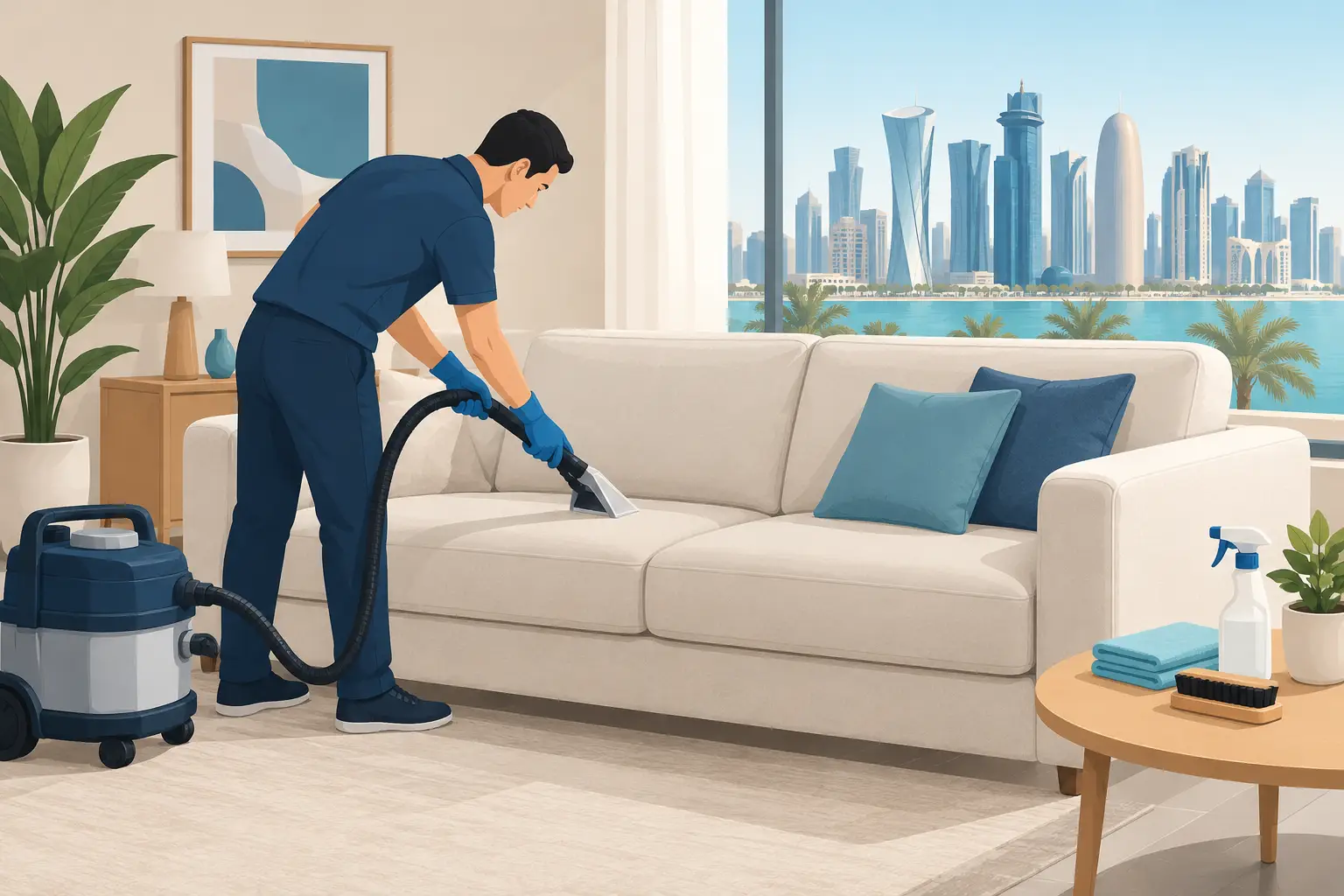
A sofa can look clean from across the room while holding dust, body oils, food crumbs, pet hair, and old spills deep in the fabric. This upholstery care guide helps Doha households, tenants, and office managers protect their furniture between professional cleanings without damaging the material.
Thank you for reading this post, don't forget to subscribe!Upholstered furniture works hard every day. Family sofas handle movie nights, children, guests, and meals. Office chairs collect dust and daily use from staff and visitors. In Qatar, open windows, sand particles, air conditioning, and high temperatures can make fabrics look dull sooner than expected. A few regular habits can keep seating fresher, safer, and more comfortable.
Upholstery Care Guide: Start With the Fabric Label
Before using water, detergent, or a stain remover, check the care label under the cushion, beneath the chair, or on the furniture frame. The cleaning code tells you what the fabric can safely handle.
A code marked W can usually be cleaned with a water-based upholstery cleaner. S means a solvent-based product is required. WS or SW may allow either method, while X means the piece should only be vacuumed or professionally cleaned. If the label is missing, test any product on a small hidden area first, such as the back edge of a cushion.
This small check prevents a common problem: using too much water or the wrong chemical, then ending up with water marks, fading, stiff fabric, or a lingering odor. Delicate materials such as velvet, silk, wool blends, linen, and some leather finishes need extra care. When you are unsure, professional upholstery cleaning is the safer choice.
Keep Dust From Settling Into the Fabric
Vacuuming is the most useful routine step for sofa and chair care. It removes dry soil before it becomes embedded in fibers, and it also helps reduce allergens and unpleasant odors. For busy homes, vacuum upholstery once a week. In offices, reception seating and frequently used chairs may need attention more often.
Use a soft upholstery attachment and work slowly across the seat, back, arms, sides, and cushion seams. Lift removable cushions and vacuum underneath them as well. Dust, coins, crumbs, and hair often collect in these hidden areas.
Do not press a hard vacuum head aggressively into delicate fabric. Strong friction can pull threads or flatten the pile on velvet-like materials. A gentle, steady pass is more effective than rushing.
To help furniture wear evenly, rotate loose cushions every few weeks and switch their positions when possible. This is especially helpful for the favorite corner of a family sofa or a chair used by the same employee each day. Even use keeps the shape neater and reduces obvious fading.
Treat Spills Quickly, but Do Not Scrub
The first few minutes after a spill matter. Whether it is coffee, juice, sauce, makeup, or ink, start by blotting the area with a clean white cloth or plain paper towel. Press gently to absorb the liquid. Do not rub in circles. Scrubbing pushes the spill deeper into the padding and can spread the stain beyond its original spot.
For fabrics marked W or WS, use a very small amount of approved upholstery cleaner or mild soap solution on a cloth, not directly on the sofa. Blot from the outside of the stain toward the center. Then use a separate slightly damp cloth to remove residue and blot again with a dry towel.
Avoid soaking the fabric. Excess moisture can leave rings, affect the padding, or create a musty smell if the furniture does not dry fully. Open the room for airflow or run the air conditioning, but keep the furniture away from direct heat. Hair dryers and heaters can shrink some fabrics or set stains.
Common stains need different care
Greasy food stains, such as oil or butter, should be blotted first and treated according to the fabric code. Adding water immediately can spread oil through the fibers. Coffee and tea stains are easier to remove when treated promptly, before the color dries into the upholstery. For ink, paint, nail polish, or unknown chemical spills, avoid home experiments. These stains can become permanent when the wrong product is used.
Pet accidents, vomit, and other biological stains need more than surface cleaning. The visible mark may disappear while odor-causing residue remains in the cushion. A professional deep clean can reach below the fabric and help sanitize the affected area safely.
Protect Upholstery From Everyday Damage
Sunlight can fade fabric colors surprisingly quickly, especially near large windows in Doha apartments, villas, and offices. Close curtains during the strongest part of the day or reposition furniture when practical. A sofa does not need direct sun for hours to show uneven color over time.
Food and drinks are another simple risk to manage. A tray for tea or coffee, washable throws on high-use seats, and a clear rule about meals on upholstered furniture can prevent many difficult stains. This is not about making a home feel restricted. It is about avoiding the stress of a stain that could have been prevented in seconds.
If you have children or pets, choose easy-care throws for the most used seats and wash them regularly. They provide a useful barrier against sand, snack spills, pet hair, and everyday marks. Remove throws occasionally so the upholstery underneath can be vacuumed and aired out.
For leather furniture, wipe dust with a dry, soft microfiber cloth. Use only a leather-safe cleaner or conditioner recommended for that finish. Standard household sprays, wet wipes, bleach, and strong degreasers can strip protective coatings and cause cracking or discoloration.
When Home Cleaning Is Not Enough
Routine care keeps furniture presentable, but it cannot fully remove the soil that settles deep below the surface. If your sofa smells stale after vacuuming, looks gray or uneven, leaves marks on clothing, or has old spots that reappear, it is time for professional upholstery cleaning.
This is also true after moving into a new property, after a renovation, before welcoming guests, or when preparing a rental home for inspection. Upholstery can hold hidden dust from previous occupants, construction particles, and bacteria from daily use. Surface cleaning alone may not give you the fresh result you want.
Professional teams use methods selected for the fabric type and condition. The goal is not simply to make the furniture look wetter or heavily perfumed. Proper cleaning removes built-up soil while helping the upholstery dry correctly and retain its texture. For offices, scheduled chair and sofa cleaning also supports a cleaner, more welcoming workplace for staff and clients.
Cleaning Company provides upholstery and sofa cleaning across Doha, Lusail, West Bay, Al Rayyan, and surrounding Qatar areas. Trained staff can assess the furniture, focus on stains and hidden dirt, and work around a time that suits your home or business. This is especially useful when you have large sectionals, heavily used office seating, or fabrics that need careful handling.
A Simple Care Schedule for Sofas and Chairs
A realistic schedule is easier to follow than an ambitious one. Vacuum weekly if the furniture is used daily, wipe up spills immediately, and rotate loose cushions every few weeks. Give the upholstery a closer inspection once a month for stains, fading, loose threads, or odors.
Most homes benefit from professional upholstery cleaning every six to twelve months. The right frequency depends on the number of people in the home, pets, children, allergies, and how often the furniture is used. A quiet guest room may need less attention, while a family living room or office reception area may need a deep clean more often.
Do not wait until a sofa looks visibly dirty. By that point, soil may already be pressed deep into the fabric. Regular care protects the comfort, appearance, and useful life of furniture you have already invested in.
A clean sofa makes a room feel calmer the moment you walk in. Take care of small spills early, keep up with gentle vacuuming, and book professional help when stains, odors, or deep dirt need more than a quick fix. Then you can relax and enjoy seating that looks fresh, feels clean, and is ready for everyday life.