
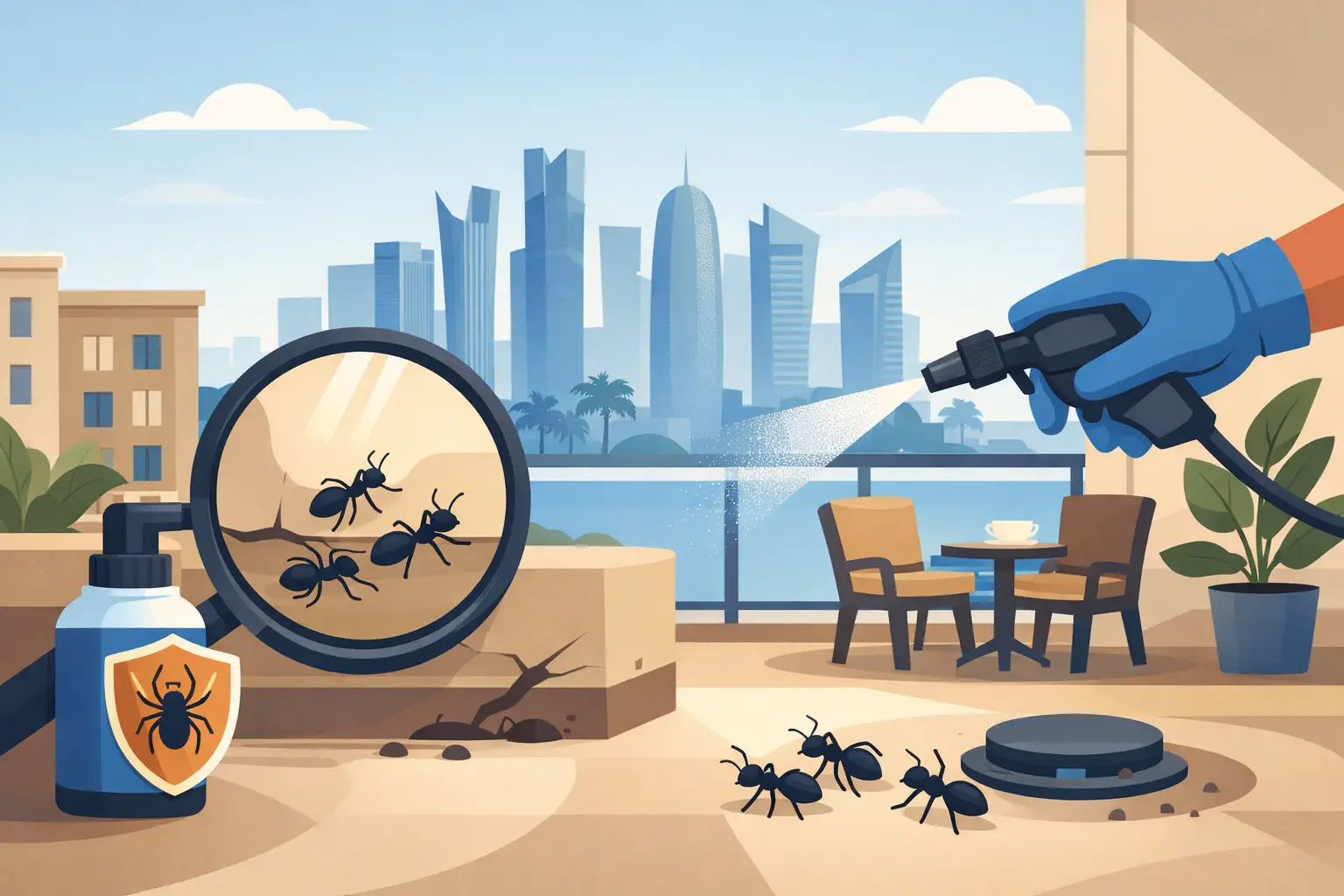
A line of ants moving from the kitchen counter to a cupboard can feel like a small problem at first. Then it reappears after cleaning, often with more ants than before. When people search for ant control for apartments Doha, they are usually looking for more than a quick spray. They need a clean, safe, lasting solution that works within the realities of apartment living.
Thank you for reading this post, don't forget to subscribe!In Doha, ants can find what they need in even the tidiest home: a few food crumbs, moisture under a sink, an unsealed packet in a pantry, or a gap around a pipe. Because apartment units share walls, plumbing routes, and service spaces, the ants you see may not be nesting inside your kitchen at all. Effective treatment means stopping the trail, locating the source, and reducing the conditions that invite ants back.
Why Ants Keep Returning to Doha Apartments
Ants are persistent for a reason. Once a worker ant finds food or water, it leaves a scent trail that guides others to the same place. Wiping the visible ants away helps in the moment, but it does not remove the colony or prevent another trail from forming.
Warm weather also makes pest activity a year-round concern in Qatar. Air-conditioned apartments may feel dry and cool, while kitchens, bathrooms, utility cupboards, balconies, and pipe openings can still provide the moisture and shelter ants seek. A small leak beneath the sink or condensation around an appliance can be enough to support repeat activity.
Apartment buildings add another layer to the issue. Ants may travel through wall voids, floor cracks, electrical openings, drain areas, or shared plumbing lines. If the colony is outside the unit or in a common building space, surface cleaning alone will not solve the problem. That is why a professional inspection is often the practical next step when ants continue to return.
Ant Control for Apartments in Doha Starts With Inspection
The best ant treatment is not based on guesswork. A trained pest control team begins by checking where ants are active, what may be attracting them, and how they are entering the apartment. The kitchen is a common focus, but bathrooms, laundry areas, balconies, storage cabinets, and entry points should also be checked.
The goal is to identify the difference between a passing trail and an established problem. A few ants near a window after rain or building maintenance may be temporary. Ants appearing daily near food storage, under cabinets, or around sinks are more likely to point to an active access route or colony nearby.
A careful inspection also helps protect your home. Families with children and pets understandably want pest control handled responsibly. Professional treatment should be selected and applied with the apartment layout, level of activity, and household needs in mind. The strongest-smelling product is not automatically the best solution. Correct placement and a targeted approach matter more.
What Professional Ant Treatment Should Address
Reliable ant control is a process, not simply a visit with a can of insecticide. Depending on the severity and location of the infestation, treatment may involve targeted applications along entry points, cracks, cabinet edges, plumbing areas, and other affected spaces. The purpose is to control the ants where they travel and reduce the colony’s ability to keep sending workers into your home.
For many apartment infestations, bait-based treatment can be useful because foraging ants carry it back to the colony. This approach takes patience. You may briefly notice activity before it declines, as ants interact with the treatment. Spraying every visible ant immediately after a bait has been placed can interfere with that process, so follow the technician’s instructions closely.
The right method depends on the ant species, the size of the problem, and the building conditions. A kitchen-only issue may need a different response than ants entering from a balcony or shared service shaft. If there are signs of a wider building problem, your building management may need to inspect common areas as well. Good pest control includes clear communication about what is being treated, what you should do afterward, and whether a follow-up is recommended.
Prepare Your Apartment for Better Results
A little preparation helps the treatment reach the right areas and makes your home less attractive to ants afterward. Before a scheduled visit, clear food items from countertops and make space under sinks or inside lower cabinets where activity has been seen. Store open dry foods, sweets, pet food, and cooking ingredients in tightly sealed containers.
Clean spills promptly, especially sugary drinks, cooking oil, and food residue around small appliances. Empty kitchen trash regularly and rinse recyclable containers before placing them in the bin. These daily habits do not replace pest treatment, but they remove the easy food sources that keep ants returning to the same trail.
Moisture control is equally valuable. Let the team know about slow drains, leaking pipes, wet cabinet bases, or recurring condensation. Repairing a small plumbing issue can make a major difference over time. If ants are entering through visible cracks around pipes, windows, or doors, sealing those openings after treatment can help block future access.
Avoid Quick Fixes That Can Make the Problem Harder
It is tempting to use several household sprays, powders, and strong cleaners as soon as ants appear. These products may kill ants on contact, but they can also scatter the colony or push ants into a new route inside the walls. Mixing products is especially unwise in a closed apartment, where fumes and residues can affect children, pets, and sensitive household members.
Another common mistake is treating only the spot where ants are visible. Ants may be using that location as a food stop rather than an entry point. If they disappear from one counter and show up beside the bathroom sink two days later, the underlying route remains active.
Keep cleaning as normal, but avoid washing or spraying directly over professionally treated areas unless you have been told it is safe to do so. If you are unsure, ask. Clear aftercare guidance is part of dependable service.
When to Call for Professional Ant Control
You do not need to wait until the problem feels severe. Professional help is sensible when ant trails return repeatedly, ants are found inside food cupboards, activity is spreading to more than one room, or DIY products have not worked. It is also a smart choice before moving into a new apartment, after a tenant moves out, or when preparing a property for new residents.
Landlords and property managers benefit from acting early as well. A prompt treatment helps protect the condition of the property and gives tenants confidence that hygiene concerns are being handled properly. For busy households, having one trusted local provider for pest control, deep cleaning, and sanitation can remove a great deal of stress.
Cleaning Company provides targeted pest control alongside professional cleaning services throughout Doha and the wider Qatar area. Trained staff can assess the problem, treat affected spaces carefully, and help you understand the simple steps that support lasting results. Scheduled and urgent service options make it easier to respond before a small trail becomes a recurring household issue.
After Treatment: Keep Your Home Fresh and Protected
Most homes see a noticeable reduction in activity after treatment, but the exact timeline depends on the method used and where the colony is located. Continue to monitor the areas where you first saw ants. A small amount of activity can be normal shortly after certain treatments, while a persistent or growing trail should be reported for advice or follow-up.
Maintain sealed food storage, dry sink areas, regular waste removal, and clean countertops. Check pet feeding areas each day, and do not leave food bowls out overnight if ants have been active nearby. These simple routines support a hygienic, orderly apartment and make it harder for pests to settle in again.
A clean apartment should feel comfortable, not like a place where you have to watch every counter for insects. With the right inspection, targeted treatment, and a few practical prevention habits, you can get back to enjoying a fresh home with confidence.