
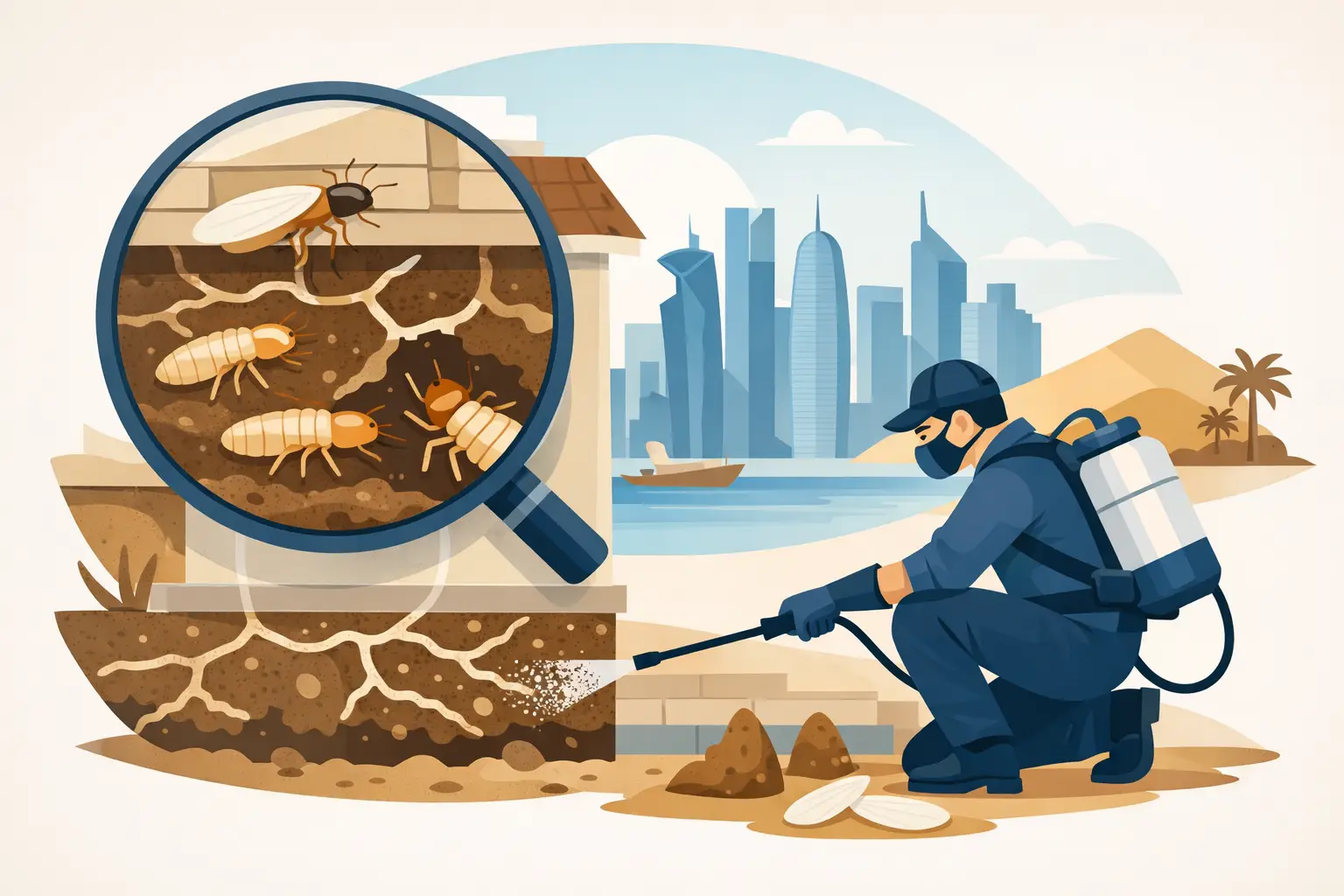
A termite problem rarely begins with an obvious disaster. It may start with a hollow-sounding skirting board, a door frame that suddenly sticks, faint mud lines near a wall, or small wings left by a window after swarming. In Qatar, warm conditions and hidden moisture around kitchens, bathrooms, AC drainage points, gardens, and building foundations can create opportunities for termites to settle unnoticed. Professional anti termite treatment in Qatar helps stop that activity before repair costs grow.
Thank you for reading this post, don't forget to subscribe!Termites do not behave like ordinary household pests. They live and feed out of sight, often inside timber, behind walls, beneath flooring, or around structural joints. Surface cleaning can remove visible signs, but it will not reach the colony or protect vulnerable areas. The right response is a careful inspection followed by a treatment plan that fits the property, the level of activity, and the construction type.
Why termites need fast, professional attention
Termites consume cellulose, the material found in wood, paper, cardboard, and some building products. They can damage wooden doors, wardrobes, cabinets, false ceilings, flooring, and stored items. In severe cases, they may weaken concealed timber elements and leave homeowners facing repairs that are far more expensive than early pest control.
The challenge is that termites are quiet. A room can look clean and well maintained while activity continues behind a wall or below the floor. This is why a quick spray around a suspected area is usually not enough. It may disturb visible insects without addressing the source of the problem.
For offices, retail spaces, villas, apartments, warehouses, and newly occupied properties, prompt action also protects day-to-day comfort. No one wants to find damaged documents, weakened cabinets, or termite trails in a reception area. A trained pest control team can assess the situation discreetly and work to minimize disruption to your home or business.
Common signs of termite activity in Qatar
Not every cracked piece of wood means termites. Heat, humidity changes, water leaks, and normal wear can also affect furniture and fittings. Still, certain signs deserve a professional inspection, especially when they appear together.
Look for mud tubes or narrow soil-colored trails along walls, foundations, pipes, or outdoor surfaces. These tunnels help subterranean termites move while staying protected. You may also notice wood that sounds hollow when tapped, paint that bubbles without a clear moisture cause, small piles of discarded wings, or doors and windows that become difficult to open.
A musty smell near a wooden fixture, tiny holes in damaged timber, and soft or crumbling wood are further reasons to act. Keep in mind that the visible spot may not be the only affected area. Termites can travel through concealed routes, so inspection should extend beyond the first sign you find.
How anti termite treatment in Qatar works
A dependable treatment begins with inspection, not assumptions. The technician checks accessible indoor and outdoor areas, identifies likely entry points, looks for moisture issues, and evaluates the type and extent of termite activity. This first stage matters because treatment methods vary between an active infestation and preventive protection for a property with no current signs.
Treatment for an active infestation
When termites are active, the goal is to reach the colony pathways and create an effective treated zone around vulnerable areas. Depending on the property and construction, this can involve targeted application in affected wood, wall voids, joints, floor edges, utility openings, or the soil around the building.
Some situations require carefully placed drilling to access concealed treatment areas. This should be explained before work begins, including where it is needed and how the area will be finished afterward. A professional team does not use the same approach for every home. An apartment with activity around a kitchen cabinet needs a different plan than a villa with termites near the perimeter foundation.
Baiting systems may also be appropriate in selected cases. These are designed to attract termites and carry treatment back through their feeding network. Baits can be useful, but they require monitoring and may take time to show full results. The best option depends on termite species, access, activity level, and property layout.
Preventive termite protection
Preventive treatment is often considered before moving into a new villa, after renovation, or when fitting new woodwork. It can also be valuable for landlords and facility managers who want to protect a property before damage becomes visible.
Pre-construction and post-construction protection are not identical. Pre-construction work is generally performed before slabs, flooring, and finishes make the soil inaccessible. Post-construction treatment focuses on existing entry points and accessible perimeter zones. A pest control provider should clearly explain what can realistically be protected in a finished building rather than promising complete access where construction limits it.
Preparing your home or office for treatment
Good preparation helps the team work safely and thoroughly. You may be asked to clear items from cabinets, move furniture slightly away from affected walls, remove food and utensils from treatment areas, and provide access to kitchens, bathrooms, storage rooms, balconies, or exterior perimeter spaces.
If children, pets, elderly family members, or people with respiratory sensitivities are present, tell the service provider before the appointment. The team can explain the products being used, the required precautions, and when each area can be used again. Follow their instructions about ventilation, cleaning treated surfaces, and re-entry times. Safety is not a one-size-fits-all promise – it depends on the treatment method and the areas involved.
For commercial properties, scheduling matters just as much. Treatment can often be planned outside busy operating hours or in sections, helping reduce interruption for staff and visitors. Clear communication with building management is useful when access to common areas, utility rooms, or exterior foundations is required.
What happens after treatment
Termite control is not always an instant visual result. You may stop seeing signs quickly, but complete colony control can take time depending on the method used and the size of the infestation. Your technician should advise you on expected activity, follow-up visits, and whether monitoring is recommended.
After treatment, avoid washing, drilling, repainting, or sealing treated areas unless you have been told it is safe to do so. These actions can reduce the effectiveness of a carefully applied barrier or disturb monitoring points. If you see fresh mud tubes, new winged insects, or continued damage, report it promptly rather than treating the area yourself.
It is also wise to address the conditions termites favor. Repair plumbing leaks, prevent water from collecting near foundations, keep cardboard and unused timber off the floor, and avoid storing wood directly against exterior walls. Regular deep cleaning helps you spot changes around cabinets, skirting, storage spaces, and utility areas sooner.
Choosing a termite control provider you can trust
The lowest quote is not always the best value when the problem involves possible property damage. Ask whether the provider will inspect before treating, explain the treatment method, identify preparation steps, and provide practical guidance for follow-up. You should also expect trained staff, safe working practices, punctual arrival, and clear answers about the areas being treated.
For a cleaner, more protected property, Cleaning Company provides professional pest control alongside home, office, deep cleaning, and sanitation services across Qatar. This makes it easier for busy residents and managers to coordinate practical property care without juggling multiple service teams.
A reliable provider will never dismiss your concerns because the signs look small. Early termite activity is often the best time to act, when treatment can be more targeted and damage may still be limited.
Frequently asked questions
Is termite treatment safe for children and pets?
Professional treatments are applied with specific safety procedures, but the precautions depend on the product, treatment location, and level of exposure. Always inform the technician about children and pets, remove them from the treatment area as instructed, and wait for the recommended re-entry time.
Can I treat termites myself?
Store-bought products may kill insects you can see, but termites usually remain hidden in colonies and travel through protected routes. DIY treatment can delay proper control and make it harder to judge the true extent of the problem. A professional inspection is the safer choice when there are signs of structural activity.
How often should a property be inspected for termites?
Annual checks are a sensible starting point for many properties, especially villas, ground-floor units, older buildings, and locations with gardens or known moisture issues. An inspection is also worthwhile before moving in, after major renovation, or when installing substantial new woodwork.
If you have noticed mud trails, hollow timber, or unexplained damage, do not wait for the issue to become obvious. Arrange an inspection, protect the areas you value, and give your home or workplace the careful attention it deserves.