
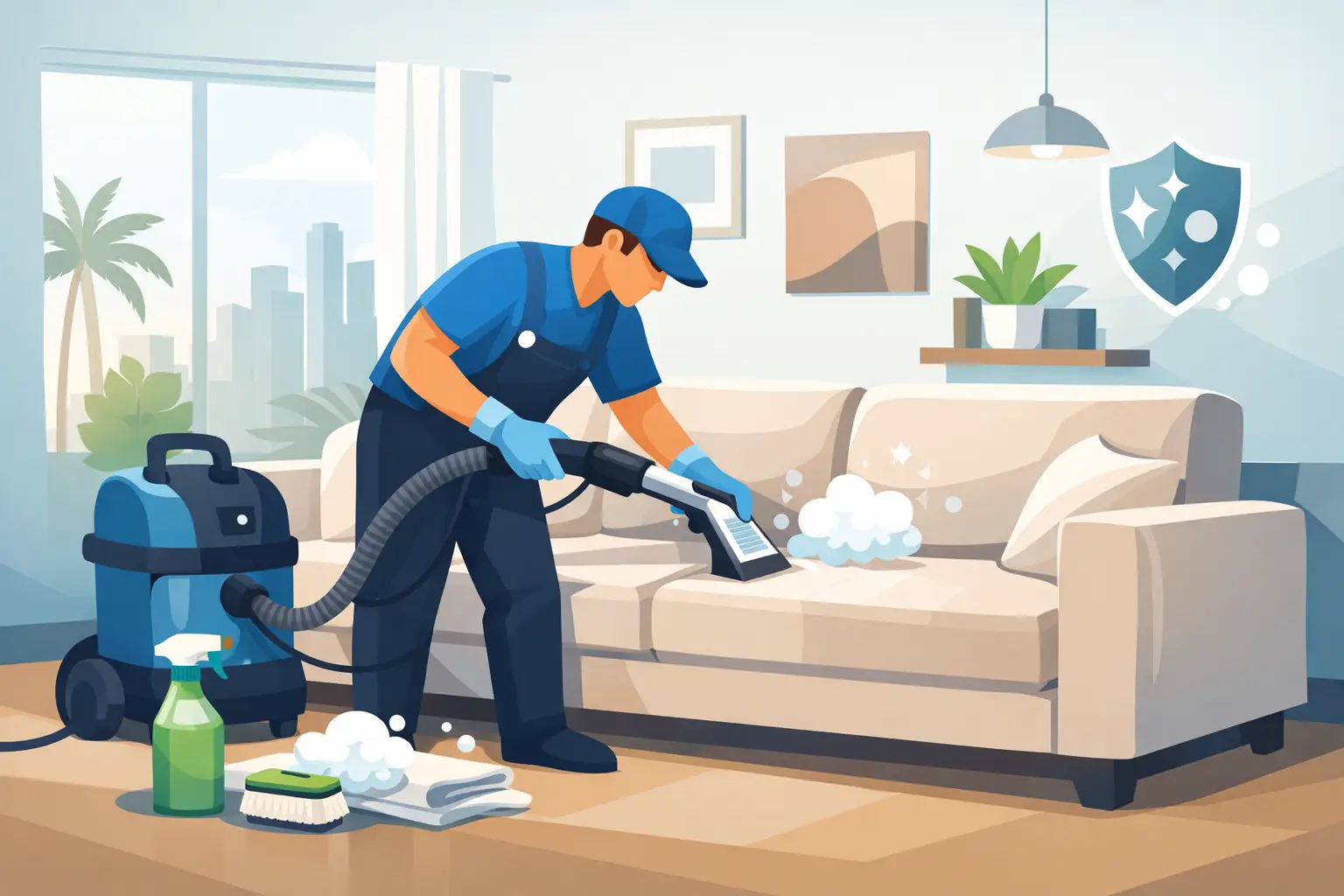
Your sofa can look clean while holding fine dust, food crumbs, pet hair, body oils, and odors deep in its cushions. In Qatar, air conditioning, frequent indoor living, sand carried in from outside, and busy family routines can make upholstery lose its fresh feel sooner than expected. Sofa deep cleaning at home in Qatar is possible for regular care, but the right method depends on the fabric, the stain, and how much moisture the sofa can safely handle.
Thank you for reading this post, don't forget to subscribe!A careful clean improves more than appearance. It helps your living room feel more comfortable, reduces lingering odors, and protects a piece of furniture your family uses every day. The goal is not to soak the sofa or use the strongest product available. It is to remove dirt safely, leave the fabric residue-free, and make sure the upholstery dries completely.
Start With Your Sofa’s Fabric and Care Label
Before bringing out a cleaner, check the tag under the cushions or along the sofa frame. Most upholstery labels use a simple code. W means the fabric can generally be cleaned with water-based products. S means it requires a solvent-based cleaner. WS means either option may be suitable. X means vacuuming or professional cleaning only.
This small check prevents many common mistakes. Applying water to an S-coded fabric may create rings, shrinkage, or color changes. Scrubbing delicate materials such as velvet, linen, silk blends, or light-colored upholstery can flatten fibers and spread a stain instead of lifting it.
If the label is missing, test any product in a hidden area, such as the back of a cushion. Apply a small amount, blot it with a white cloth, and allow it to dry. If color transfers to the cloth or the fabric changes texture, stop there. A professional upholstery service is the safer choice.
What You Need for Sofa Deep Cleaning at Home in Qatar
For most water-safe sofas, you do not need a cupboard full of products. A vacuum with an upholstery attachment, soft microfiber cloths, a soft-bristle brush, a bowl of clean water, and a mild upholstery-safe cleaner will handle routine buildup. White cloths are best because colored towels can transfer dye to pale fabric.
Avoid harsh bleach, strong degreasers, and heavily perfumed sprays. They may leave residue behind, irritate sensitive skin, or damage the upholstery backing. This matters especially in homes with young children, pets, allergies, or asthma. A mild product used properly is usually more effective than an aggressive cleaner used too generously.
Qatar’s climate adds one more consideration: drying time. Although outdoor heat is intense, indoor humidity and air-conditioned rooms can slow drying if airflow is limited. Plan your cleaning when you can keep the room ventilated and use fans or air conditioning to help the sofa dry evenly.
A Practical Deep-Cleaning Method for Fabric Sofas
1. Remove loose dirt before adding moisture
Take off removable cushions, vacuum the seat, arms, backrest, seams, and gaps around the frame. Use a crevice tool where possible. This step is essential because wet dust can turn into muddy marks that are much harder to remove.
Check beneath the cushions for coins, snack crumbs, hair clips, and small toys. Then vacuum both sides of loose cushions. If the cushion covers are machine washable, only wash them when the care label clearly allows it. Covers can shrink, lose shape, or become difficult to put back on when washed incorrectly.
2. Treat stains with patience, not pressure
For a fresh spill, blot immediately with a dry microfiber cloth. Press gently and lift the liquid. Do not rub in circles, as rubbing pushes the spill farther into the fibers and can leave a visible patch.
For dried marks, apply a small amount of upholstery cleaner to a cloth rather than directly onto the sofa. Dab from the outer edge of the stain toward the center. Work in small sections and use a second clean, slightly damp cloth to remove cleaner residue. Blot dry afterward.
Food, coffee, makeup, ink, and pet accidents all react differently, so there is no single homemade solution that is safe for every stain. If a stain is old, unknown, or large, repeated DIY treatments can set it permanently. It is often better to pause and arrange specialist cleaning rather than risk making the area more noticeable.
3. Clean the full surface evenly
Once individual stains are addressed, clean the rest of the sofa one panel at a time. Lightly dampen a microfiber cloth with the approved solution and wipe in the direction of the fabric weave. Keep the cloth damp, not dripping.
Pay extra attention to armrests, headrest areas, and favorite seats. These zones collect natural oils and daily grime, even when they do not look visibly dirty. For textured fabric, a soft brush can gently lift soil from the fibers, but use minimal pressure to avoid damaging the pile.
After cleaning a section, wipe it with another cloth lightly dampened with plain water to remove remaining product. Then blot with a dry towel. Cleaning too much at once can cause uneven drying, water marks, and a musty smell.
4. Dry it completely before use
Leave cushions separated and stand them on their sides if they can do so safely. Keep windows open when weather conditions allow, run the air conditioning, and position fans to circulate air around the sofa. Do not cover it with throws or let children and pets sit on it until it is fully dry.
A sofa that feels dry on the surface may still be damp inside. Depending on the fabric, padding thickness, and room airflow, drying can take several hours or longer. If you notice a damp odor after cleaning, it likely needs more ventilation before being used again.
Leather Sofas Need a Different Approach
Leather should not be cleaned like fabric upholstery. Vacuum the seams first, then wipe the surface with a soft, barely damp cloth and a leather-safe cleaner. Use very little water, especially around stitching and cushion edges.
After cleaning, apply a suitable leather conditioner if the manufacturer’s guidance permits it. This can help prevent dryness and cracking, a valuable step in air-conditioned homes where leather may gradually lose moisture. Never use abrasive pads, bleach, or random household oils, which can leave a sticky finish or alter the color.
When Home Cleaning Is Not Enough
At-home care works well for light dirt, routine freshening, and quick spill response. However, professional help is a better fit when the sofa has deep odors, widespread staining, visible discoloration, pet urine, mold concerns, or heavily soiled cushions. It is also the sensible option for expensive upholstery, delicate fabrics, and sofas that have not been properly cleaned for a long time.
Trained technicians can assess the material, select a suitable treatment, and use controlled equipment to lift embedded soil without over-wetting the fabric. This is particularly useful for large sectional sofas and busy households in Doha, Lusail, West Bay, and Al Rayyan where time is limited and drying a sofa incorrectly can disrupt the whole home.
Cleaning Company provides tailored sofa and upholstery cleaning with trained staff and safe, detailed methods designed around your fabric and household needs. A scheduled service can be especially helpful before guests arrive, after a move, or when regular vacuuming is no longer restoring freshness.
Keep Your Sofa Fresh Between Deep Cleans
A few habits make future cleaning easier. Vacuum upholstery weekly if you have pets, children, or open windows that let in dust. Rotate loose cushions every few weeks so one seat does not wear faster than the others. Deal with spills right away, and use washable throws in high-use areas if your sofa fabric allows it.
Deep cleaning frequency depends on your home. A lightly used sofa may need professional attention once a year, while homes with pets, children, frequent visitors, or allergy concerns may benefit from cleaning every six months. The most reliable sign is simple: when the sofa looks dull, smells less fresh, or feels dusty after vacuuming, it is time to act.
A clean sofa changes the feeling of the room because it is where people relax, gather, and welcome guests. Give it regular care, avoid risky shortcuts, and choose professional support when the fabric or the problem calls for it. That way, your home can stay comfortable, hygienic, and ready for everyday life.