
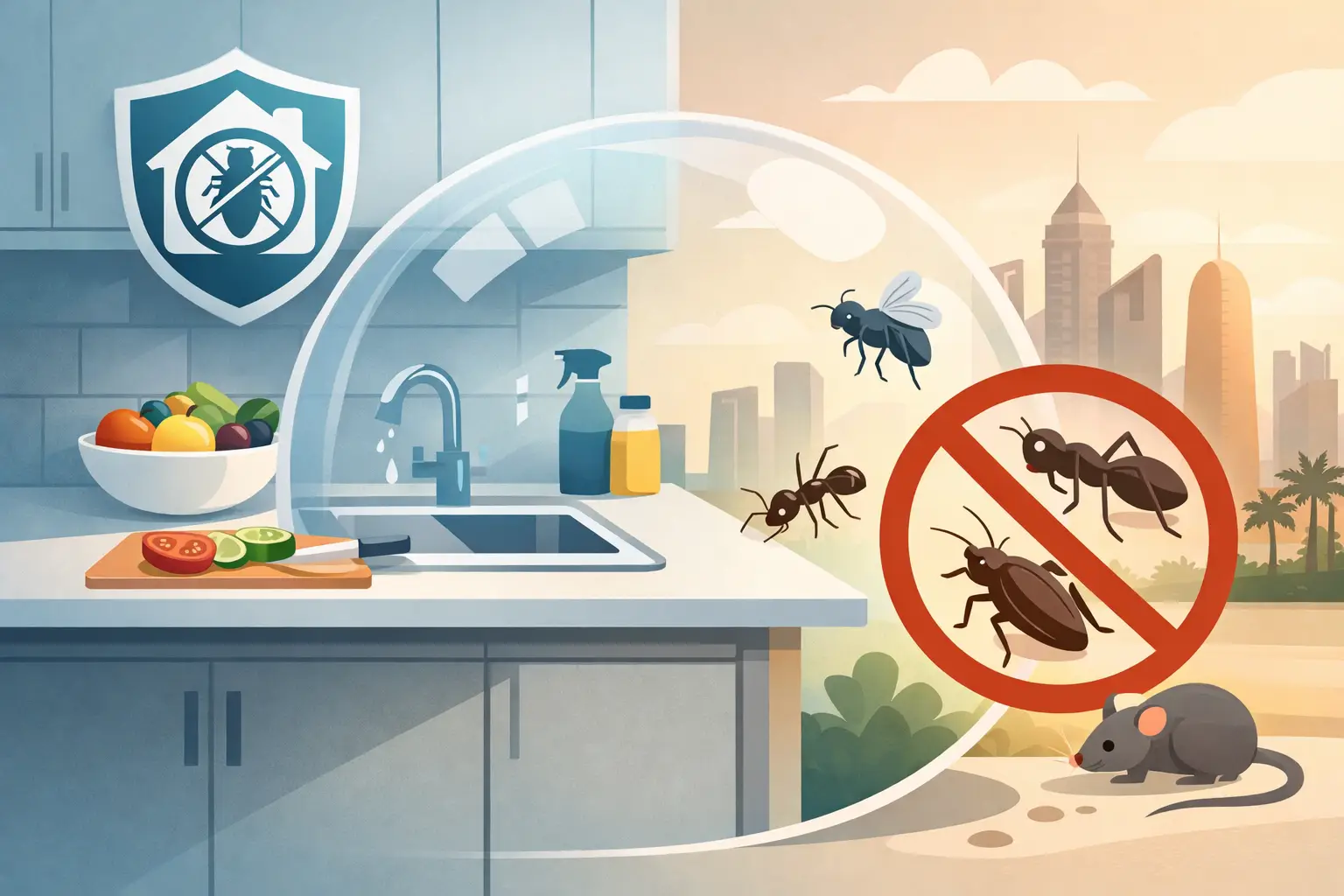
A few crumbs beneath the toaster or a leaking bag of trash can be enough to invite ants, cockroaches, fruit flies, or pantry pests into a Doha kitchen. Knowing how to prevent kitchen pests is less about harsh chemicals and more about removing the food, water, and hiding places they need. Small daily habits protect your family’s comfort, food safety, and the fresh feeling of your home.
Thank you for reading this post, don't forget to subscribe!Qatar’s warm climate makes prevention especially worthwhile. Pests can enter through tiny gaps, arrive in grocery bags and cartons, or move through shared plumbing and service areas in apartment buildings. A clean-looking kitchen is a strong start, but the details behind cabinets, under appliances, and around drains make the real difference.
How to Prevent Kitchen Pests Before They Settle In
Pests do not need a large mess to become a problem. A thin film of cooking oil on the stovetop, spilled rice inside a drawer, or moisture under the sink can provide what they need. The goal is to make the kitchen inconvenient for pests every day, not to wait until you see one.
Start with the areas where food is prepared and stored. Wipe counters after each meal, including the edges near the wall and underneath small appliances. Clean the stovetop once it cools, because grease attracts cockroaches and can build up where it is difficult to notice. Sweep or vacuum the floor regularly, paying close attention to corners, beneath the dining table, and the narrow space beside the refrigerator.
Do not forget handles, cabinet fronts, and the outside of jars. Sticky fingerprints and drips may seem minor, but they leave a trail of food residue. A quick wipe with a suitable kitchen-safe cleaner keeps surfaces hygienic and removes the scents that draw insects toward food sources.
Store Food in Sealed, Easy-to-Clean Containers
Original cardboard boxes, open snack bags, and loosely folded flour packets are easy access points for pantry pests. Transfer dry goods such as rice, flour, cereal, pasta, dates, nuts, spices, and pet food into tightly sealed containers as soon as possible. Clear containers can be helpful because you can spot low supplies, spills, or signs of contamination without opening every item.
Keep fruit covered or store ripe produce in the refrigerator when practical. In Doha, fruit can ripen quickly on the counter, and overripe pieces attract fruit flies. Check produce bowls daily, especially after a large grocery delivery, and remove anything soft or damaged before it affects the rest.
It also helps to keep storage shelves orderly. Avoid packing cabinets so tightly that crumbs and expired goods disappear at the back. Rotate older items to the front, clean shelves before restocking, and inspect dry foods if you notice webbing, tiny beetles, or unusual powder in a package. Discard contaminated food in a sealed bag rather than leaving it in the indoor trash.
Control Moisture Around Sinks, Drains, and Appliances
Water is often the missing piece in kitchen pest prevention. Even when food is properly stored, a slow leak or wet sponge can encourage cockroaches and other unwanted visitors to remain nearby.
Dry the sink each evening and avoid leaving dirty dishes overnight when possible. Rinse sponges thoroughly, squeeze them dry, and replace them regularly. A sponge holder that allows airflow is better than leaving a wet sponge flat on the counter. Dishcloths should be washed often and hung to dry completely.
Look under the sink at least once a week. Check pipe connections, the bottom of the cabinet, and the area around water filters for dampness. Address drips quickly, even small ones. If you rent an apartment, report plumbing issues to building maintenance before moisture causes cabinet damage or becomes a recurring pest source.
Drains deserve regular attention too. Food particles and grease can collect inside, creating odors and a breeding area for drain flies. Remove visible debris from the sink strainer daily. Clean the drain and garbage disposal, if your kitchen has one, according to the manufacturer’s guidance. Avoid pouring cooking oil down the sink, as it can coat pipes, trap debris, and contribute to unpleasant smells.
Keep Trash From Becoming a Food Source
Your kitchen bin should have a close-fitting lid and a washable inner surface. Empty it frequently, especially when it contains food scraps, seafood packaging, meat wrappers, or fruit peels. In hot weather, waiting until the bin is completely full can lead to odors and insects surprisingly fast.
Use a bag that fits the bin properly so waste does not fall behind it. Wipe the lid, rim, and surrounding floor whenever you change the bag. If liquid leaks into the bottom, wash and dry the bin before adding a new liner. Recycling deserves the same care. Rinse bottles, cans, and food containers before placing them in a recycling bag or holding area.
For homes with pets, do not leave pet food out all day in the kitchen. Serve measured meals and store the food in a sealed container. The same rule applies to birdseed and treats, which can attract ants and pantry pests if they spill inside a cabinet.
Seal Entry Points and Remove Hidden Shelter
A spotless counter cannot stop pests that have an easy path indoors. Inspect the kitchen for gaps around pipes, utility lines, vents, windows, and under the sink. Small openings around plumbing are common access points, particularly in multi-unit buildings. Appropriate sealing materials can close minor gaps, while larger repairs may need a maintenance professional.
Pay attention to cabinet hinges, loose kickboards, and cracked wall tiles. These areas can create dark, undisturbed hiding spots. Keep the space below and behind appliances as clean as you can. Pull out the refrigerator, oven, or microwave stand periodically if it is safe to do so, then remove dust, grease, and food debris from the floor and wall.
Cardboard boxes should not stay in the kitchen longer than necessary. They can hold moisture and provide shelter for pests, especially when stored near the floor. Unpack deliveries, recycle the cardboard, and keep spare supplies in clean plastic or sealed containers instead.
Build a Weekly Kitchen Routine That Works
Prevention is easier when it is part of a realistic routine. A busy household does not need to deep-clean every day, but a focused weekly reset prevents small issues from becoming a bigger cleaning job.
Once a week, clean cabinet shelves, wipe inside drawers, inspect food packages, and wash the trash bin. Move small countertop appliances to clean underneath them. Check under the sink for leaks, clean the drain area, and sweep behind visible furniture or storage units. If your kitchen is used heavily for family meals or entertaining, you may need to do these tasks more often.
For offices, staff kitchens need clear responsibility as well. Shared snacks, coffee areas, and bins can become pest hotspots when everyone assumes someone else will clean them. A daily wipe-down schedule and regular waste removal help keep the space clean, orderly, and ready for employees and visitors.
When Cleaning Alone Is Not Enough
If you see repeated cockroaches, ant trails that return after cleaning, droppings, insect egg cases, or pests inside stored food, it is time to act promptly. Spraying a visible insect may provide a short-term result, but it does not always address the nest, entry point, or moisture issue behind the problem.
Professional pest control is often the better choice for persistent activity, large infestations, or pests returning from wall voids, drains, or neighboring units. Before treatment, thorough cleaning and food storage still matter. They reduce hiding places and help make the treatment more effective. Ask about child- and pet-safe options, follow preparation instructions carefully, and keep up the prevention routine after the service.
Cleaning Company supports homes and workplaces across Doha with detailed cleaning and pest control services designed to keep kitchens fresh, hygienic, and comfortable. Whether you need a deep clean after spotting early pest activity or regular support to stay ahead of it, a trained team can handle the hard-to-reach areas that are easy to miss during a busy week.
A pest-free kitchen is built through consistent care, not one perfect cleaning day. Clear the crumbs, dry the moisture, seal the gaps, and give your kitchen a regular reset. Those practical steps help protect the space where your family gathers and make every meal feel more comfortable.