
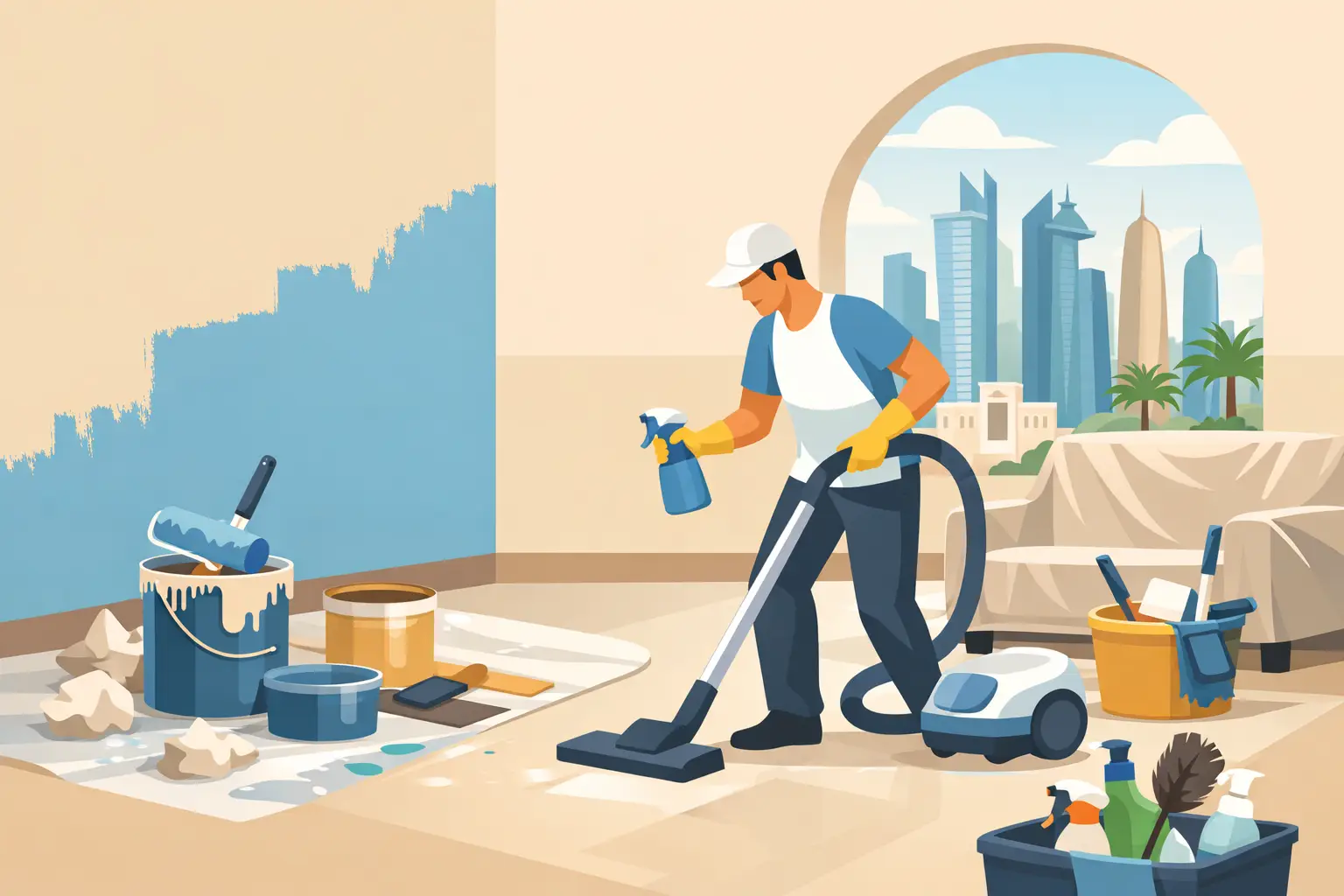
Fresh paint can make a home feel brand new, but the cleanup that follows is where many homeowners get stuck. Cleaning after painting work Qatar homes often means dealing with fine dust, paint splashes, adhesive residue, and lingering smells that settle into floors, furniture, and fabrics faster than expected.
Thank you for reading this post, don't forget to subscribe!A simple surface wipe is rarely enough. Post-paint cleaning needs a careful approach, especially in apartments and family homes where dust can spread through AC vents, cling to upholstery, and collect in corners you do not notice at first. If the cleaning is rushed, the space may still look finished while feeling dusty, sticky, or unpleasant to live in.
Why post-paint cleaning needs more than basic house cleaning
After painting, the mess is not always obvious. Large drips and plastic sheets are easy to remove, but the real issue is the layer of fine residue left behind. Sanding dust, paint mist, tape marks, and tiny splatters often settle on window tracks, light switches, skirting boards, tiles, and floors.
In Qatar homes, this can be more noticeable because closed indoor spaces rely heavily on air conditioning. Once dust enters vents or settles around return grilles, it can keep circulating even after the paint job is done. That is one reason many homeowners feel their home still seems dirty days after the painters have left.
There is also the practical side. Freshly painted surfaces can be damaged if they are scrubbed too early or cleaned with the wrong product. Strong chemicals, rough cloths, or too much water may leave marks, dull the finish, or peel edges before the paint has fully cured.
What should be cleaned after painting work
The answer depends on how extensive the painting was. A single room touch-up creates a smaller cleanup job than a full villa repaint, but the problem areas are usually the same.
Floors should be checked first. Tile, marble, vinyl, and wood can all collect paint drips, shoe marks, plaster dust, and bits of masking tape. Some of this debris is dry and loose, while some sticks to the surface and needs more careful removal.
Walls also need attention, even when they have just been painted. This does not mean washing the new paint right away. It means checking edges, removing painter’s tape properly, wiping nearby trim, and making sure no dust or splatter remains on finished surfaces.
Windows, frames, and glass often show the most obvious signs of post-paint mess. Small flecks on glass, powder on tracks, and fingerprints on frames can make a newly painted room still look unfinished.
Furniture and soft furnishings are another common issue. Even when covered, sofas, curtains, rugs, and mattresses can trap dust. If the room was sanded before repainting, that dust usually travels farther than expected.
Cleaning after painting work in Qatar homes without damaging finishes
The safest approach is to clean in stages. First, remove dry debris and dust. Then deal with paint splatters and adhesive marks. Finally, clean and refresh the room so it feels ready to use again.
Dry dust should always be handled before any wet cleaning starts. Sweeping aggressively can spread particles into the air, so vacuuming with the right attachments is usually better for floors, skirting, corners, and soft furniture. Microfiber cloths work well for collecting residue on surfaces without scratching them.
For paint spots, the right method depends on the surface and whether the paint is water-based or oil-based. On glass and tile, small spots are often removable with careful scraping and the correct cleaning solution. On wood, laminate, or delicate finishes, harsh scraping can cause more damage than the paint itself. That is where experience matters.
Fresh paint on walls should be left alone unless there is a clear defect or visible mark outside the painted area. Many paints may feel dry to the touch within hours but still need longer to cure. Cleaning too soon can leave shiny patches or uneven texture.
The most common post-paint cleaning problems homeowners face
One of the biggest frustrations is dust that keeps coming back. This usually happens when only visible areas are cleaned. Dust collects on top of doors, inside wardrobes, behind furniture, around AC vents, and along baseboards. If these areas are missed, the room never feels fully finished.
Another issue is paint splatter on surfaces that were not protected properly. Homeowners often notice it late – after it has dried on tile grout, metal fixtures, switches, or glass. Removing these spots without scratching the surface takes patience and the right tools.
Odor is also a concern, especially for families with children, elderly residents, or pets. Even low-odor paint can leave a noticeable smell in enclosed rooms. Good ventilation helps, but so does a full cleanup that removes dust and residue rather than leaving it to sit in the space.
Then there is the time factor. After a renovation or repaint, most people want to move furniture back quickly and get back to normal. But if cleaning is incomplete, dust ends up transferring onto clean clothes, bedding, and upholstery, creating more work later.
When a deeper clean makes sense
Not every painting job needs a full deep clean, but many do. If sanding was involved, if multiple rooms were painted, or if the property was vacant during the work, a more detailed service is usually the better option.
A deeper clean is especially useful in move-in and move-out situations. Empty homes make dust more visible, but they also allow better access to corners, cabinets, window frames, and floor edges where debris often builds up. In occupied homes, a deep clean helps remove the fine residue that settles around furniture and household items.
Bathrooms and kitchens may need extra care because painted surfaces sit next to tiles, counters, mirrors, fittings, and appliances that easily show paint marks. These spaces need to look clean, hygienic, and ready for daily use, not just visually improved.
What professional cleaners usually handle after painters leave
A professional post-paint cleaning service is not just regular housekeeping with extra mopping. It is a targeted process designed to remove construction-style residue while protecting fresh finishes.
That usually includes vacuuming fine dust from floors, edges, and upholstery; wiping skirting boards, doors, switches, and reachable fixtures; removing paint specks from glass, tile, and other suitable surfaces; cleaning window tracks and frames; and refreshing the room so it feels spotless, hygienic, and fresh.
For larger properties or family homes, it can also include carpet cleaning, sofa cleaning, and focused dust removal in areas where paint particles settle unnoticed. This matters because soft surfaces hold onto fine dust long after the main work appears complete.
A dependable cleaning team will also know what not to do. That includes avoiding aggressive scrubbing on newly painted walls, choosing child-safe and pet-safe products where appropriate, and adjusting the process based on the paint type, surface material, and age of the finish.
How to prepare your home for post-paint cleaning
If the painters have just finished, wait until the paint is dry enough for safe access. That does not always mean fully cured, but the space should be ready for careful movement and light cleaning around the painted areas.
It helps to remove leftover materials first. Empty cans, tape, drop cloths, and loose debris should be cleared so the cleaners can focus on dust and residue. If possible, keep windows open for ventilation where conditions allow, and turn on exhaust fans in bathrooms or kitchens.
Homeowners should also mention any delicate surfaces in advance. Natural stone, premium wood, wallpaper edges, and specialty paint finishes all need a gentler approach. The more specific the instructions, the better the result.
Choosing the right help for Qatar homes
The best post-paint cleaning support is reliable, punctual, and used to working in lived-in spaces, not just empty sites. That matters when the job involves children’s rooms, furnished apartments, or homes where families want to settle back in quickly.
Look for a team that understands detailed residential cleaning, uses safe products, and can manage both visible mess and hidden dust. If the work included carpets, sofas, or multiple rooms, choosing a provider that can handle specialized cleaning under one service is often more practical.
For homeowners who want the space ready without the stress of doing it twice, professional cleaning after painting work is often the difference between a room that only looks better and a home that genuinely feels clean again. If you need that level of care, a trusted service like Cleaning Company can help return your space to normal faster and with less hassle.
The paint may be the final step in renovation, but the cleaning is what makes the result feel complete.