
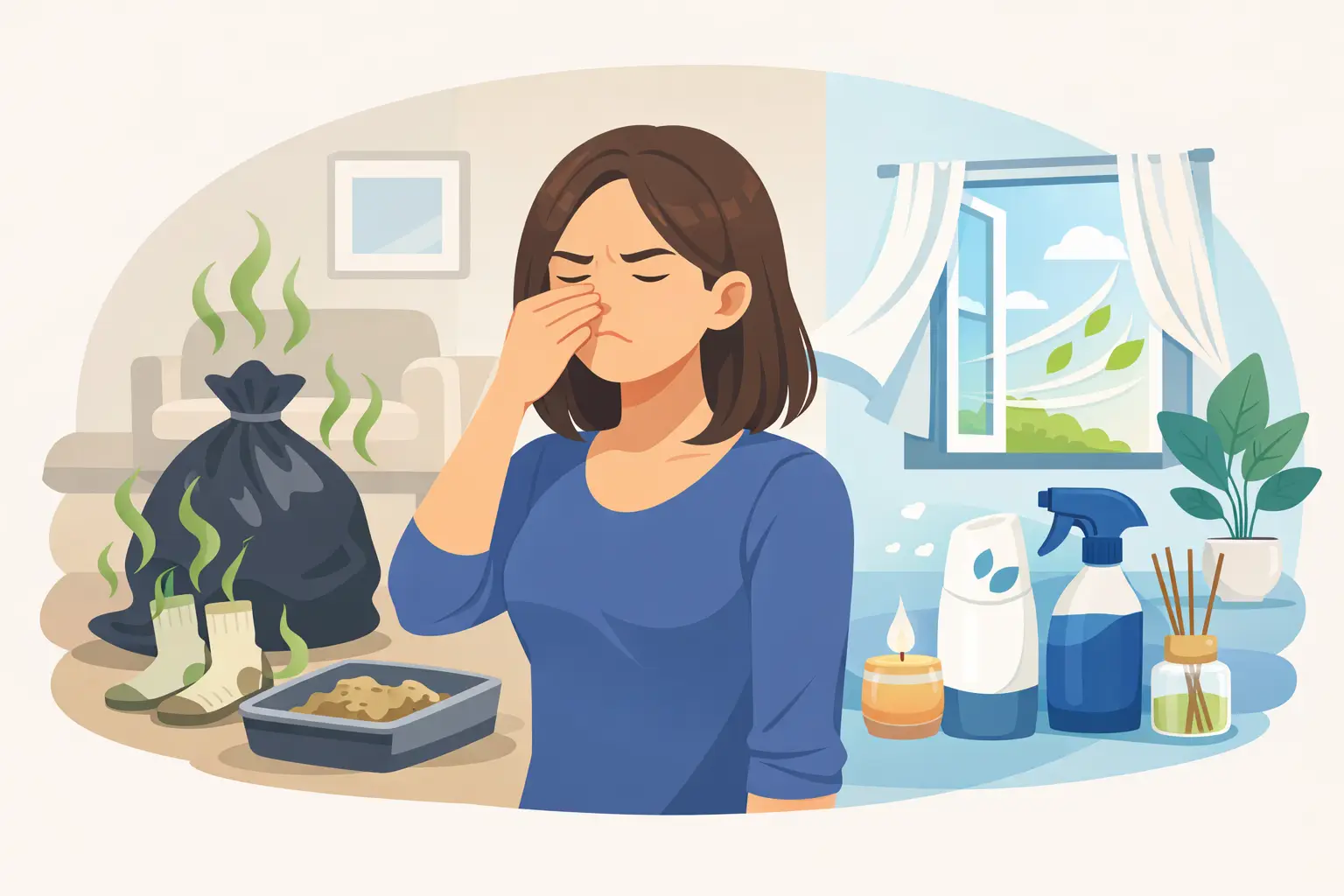
A house that looks clean but smells off never feels fully comfortable. If you are wondering how to get rid of bad smell in house spaces quickly and properly, the answer is usually not stronger air freshener – it is finding the source, cleaning it thoroughly, and stopping the odor from coming back.
Thank you for reading this post, don't forget to subscribe!Bad smells tend to settle into soft surfaces, drains, trash areas, and corners that do not get enough airflow. In busy homes, the cause may be obvious, like cooking odors or full garbage bins. In other cases, the problem is less visible, such as moisture under furniture, pet accidents in carpet fibers, or bacteria building up inside sinks and upholstery.
How to get rid of bad smell in house rooms
The fastest way to improve the smell in a home is to work in the right order. Start with ventilation, then remove waste, then clean the surfaces that hold odor. If you skip straight to fragrance sprays, the smell may fade for an hour and then return.
Open windows where possible and let air move through the room. Turn on exhaust fans in kitchens and bathrooms. Air circulation matters because stale indoor air traps odors, especially in apartments and tightly sealed spaces.
Next, clear obvious odor sources. Empty trash bins, remove old food from the refrigerator, check laundry hampers, and wash any damp towels or mop heads. These small items often cause a large part of the smell problem.
After that, focus on deep odor-holding materials. Curtains, rugs, sofas, mattresses, and carpets absorb cooking fumes, sweat, dust, and moisture over time. A quick surface wipe is not enough if the smell is embedded in fabric.
Find the real source before treating the smell
One reason odors linger is that people clean around the problem instead of dealing with it directly. A living room may smell musty, but the actual issue could be a rug backing that stayed damp after cleaning. A hallway may smell unpleasant, but the source may be a shoe cabinet with poor ventilation.
Start by noticing when the smell is strongest. If it gets worse after cooking, the kitchen is the first place to inspect. If it is strongest in the morning, look at drains, laundry, and closed rooms. If the smell appears after the AC runs, filters and ducts may need attention.
Different odors usually point to different causes. Musty smells often come from moisture, mold, or poor airflow. Sour smells can come from fabric, spills, or old food. A sewage-like smell may point to a drain issue. Pet odors usually stay trapped in carpets, upholstery, and corners your pet returns to often.
This matters because the fix depends on the cause. Moisture needs drying and sanitation. Food odors need grease removal. Fabric odors need washing or professional extraction cleaning.
Kitchen odors need degreasing, not perfume
Kitchens collect layered smells from cooking oil, spices, food waste, and sink buildup. Even if counters look clean, grease can sit on cabinet fronts, backsplashes, range hoods, and nearby walls. That grease holds odor.
Clean food preparation surfaces thoroughly with a suitable degreasing product. Wipe cabinet handles, appliance doors, and the area around the stove. Pay attention to the microwave, refrigerator seals, and the floor around the trash bin.
If the sink smells bad, the issue may be organic buildup in the drain rather than the sink itself. Scrub the drain opening and clean the overflow area if your sink has one. In some homes, the smell improves immediately after proper drain cleaning.
Refrigerators also deserve a closer look. Spills under drawers, forgotten leftovers, and worn seals can all create a stale smell. Remove shelves and drawers if needed and clean them fully before placing food back.
Bathroom smells often come back for one reason
If a bathroom smells unpleasant soon after cleaning, moisture is usually the reason. Damp floors, wet bath mats, clogged drains, and poor ventilation allow odor-causing bacteria to return quickly.
Wash bath mats regularly and let them dry completely. Clean around the base of the toilet, not just the visible surfaces. Soap residue and trapped moisture behind fixtures can create a persistent smell that standard daily cleaning misses.
Drain areas also need attention. Hair, soap, and residue build up over time and create a sour or dirty smell. If the odor seems stronger near the floor drain or shower drain, that is where to focus first.
Soft furniture can hold odor for months
Many homeowners ask why a room still smells bad after floors and counters have been cleaned. In many cases, the sofa, carpet, mattress, or curtains are the real issue.
Soft materials absorb body oils, dust, food particles, smoke, and humidity. This is especially common in homes with children, pets, or heavy AC use. The smell may not be strong at first, but over time it creates that stale indoor odor many people notice as soon as they walk in.
Vacuuming helps, but it does not always remove what is deep inside the fibers. Upholstery and carpet often need deeper treatment, especially after spills, pet accidents, or long periods without thorough cleaning. This is one of those situations where professional cleaning can make a clear difference because extraction methods remove what surface cleaning leaves behind.
How to keep bad smells from coming back
Once the odor is gone, prevention becomes the priority. The goal is not to make the house smell strongly scented. The goal is to keep it clean, dry, and well maintained so there is no smell to cover up.
Start with a regular cleaning schedule for odor-prone areas. Kitchens, bathrooms, trash bins, laundry baskets, pet areas, and upholstered furniture need consistent attention. Waiting until a smell becomes noticeable usually means buildup has already gone too far.
Humidity control also matters. In warm climates, moisture can linger indoors and settle into fabrics and corners. Use ventilation, keep wet items from sitting too long, and make sure bathrooms and kitchens dry out properly after use.
Shoes, sports gear, and laundry should not stay closed up while damp. Closets and cabinets need airflow too. A home can smell bad even when the main living areas are clean if storage spaces are holding stale air and hidden moisture.
When home remedies are enough, and when they are not
Some odor problems are easy to solve with routine cleaning and ventilation. If the issue is a full trash bin, leftover food, or damp towels, a simple reset often works.
But not every smell is a light cleaning problem. If odors keep returning, the source may be deep in carpet padding, sofa filling, mattresses, drains, or areas affected by leaks and moisture. In those cases, repeated spraying and wiping will waste time without fixing the cause.
That is usually when a professional service makes more sense. Deep cleaning, carpet cleaning, sofa cleaning, and sanitation services are designed for exactly this kind of problem – removing trapped dirt, bacteria, and odor from areas that ordinary cleaning cannot fully treat. For homes in Doha dealing with persistent smells after cooking, humidity, pets, or move-out conditions, a targeted professional clean is often the fastest route back to a fresh indoor environment.
A practical routine for a fresher home
If you want results that last, keep the routine simple and consistent. Air out the home when possible. Remove trash daily. Clean drains and bins regularly. Wash fabrics before they start holding odor. Vacuum carpets and upholstery often, and schedule deeper cleaning before buildup becomes obvious.
It also helps to treat smell as a cleaning signal, not just an air problem. Odor usually means something is sitting too long, staying too damp, or not being cleaned deeply enough. Once you approach it that way, the solution becomes much clearer.
A fresh-smelling home does not need heavy fragrance to feel clean. It needs clean surfaces, dry fabrics, clear drains, and attention to the places people usually forget. When those basics are handled well, the whole space feels lighter, more hygienic, and far more comfortable to live in.